

Flat Weft Extensions for Swimming: What Actually Works
Quick Summary
Yes, you can swim with flat weft extensions, but it is not risk-free. Chlorine and salt water dry out the hair and can loosen knots near the attachment points, so preparation and aftercare matter. Detangle, protect the lengths and braid loosely before swimming, then wash and dry carefully afterwards.
- Detangle thoroughly, working from the ends upwards, before every swim.
- Apply a pea-sized amount of water-resistant leave-in to the lengths, avoiding the attachments.
- Put a swim cap on after braiding so it does not bunch the braid underneath.
- Wash as soon as possible after swimming, using a gentle sulphate-free shampoo on the lengths.
- Air-dry where you can; if using a hairdryer, keep it cool and 15-20 cm from the attachments.
Table of Contents
- Can You Swim With Flat Weft Extensions?
- How Chlorine and Salt Water Affect Flat Wefts
- Preparing Flat Weft Extensions Before You Swim
- Swimming in Salt Water: Ocean, Sea and Sun Exposure
- Washing Hair Extensions After Swimming
- Drying Your Flat Wefts and Scalp Safely
- Booking Your Next Flat Weft Fitting for an Active Summer
- Frequently Asked Questions
Swimming in flat weft extensions is possible, but it takes preparation, the right aftercare and a realistic view of the risks. Our team at QUEEN OF GOOD HAIR has put together this guide on what actually works, so you can enjoy the pool or the sea without ruining your hair.
Flat wefts are sewn or bonded close to the scalp. That same closeness means water, chlorine and salt can reach the attachment points, and the hair itself can dry out and tangle. The sections below cover how to prepare, how to protect your hair while you swim, and how to wash and dry afterwards.
Can You Swim With Flat Weft Extensions?
Yes, you can swim with flat weft extensions, but the honest answer is that it is not risk-free. You can compare extensions for chlorinated pools to see which hold up best. Swimming can contribute to dryness, tangling and extra stress on the attachment points, and the level of risk depends on the condition of your natural hair and how often you swim.
If your wefts are newly fitted and your stylist has checked the braid base, a short swim is usually fine. Long sessions, daily swimming or swimming on freshly applied extensions call for more caution.
How Chlorine and Salt Water Affect Flat Wefts
Chlorine and salt water are the two main threats. Chlorine can dry out the hair shaft and make strands feel rough. Salt water does a similar job, and the salt crystals left behind as it dries can cause friction and knots.
Both can also weaken the hair you are trying to protect. For a fuller routine, see how to protect extensions from chlorine before you swim. Keep an eye on how your hair feels after each swim. Dryness, a sticky feel or a change in colour are signs that your routine needs tightening.
Preparing Flat Weft Extensions Before You Swim
Preparation helps make aftercare easier when swimming with extensions.
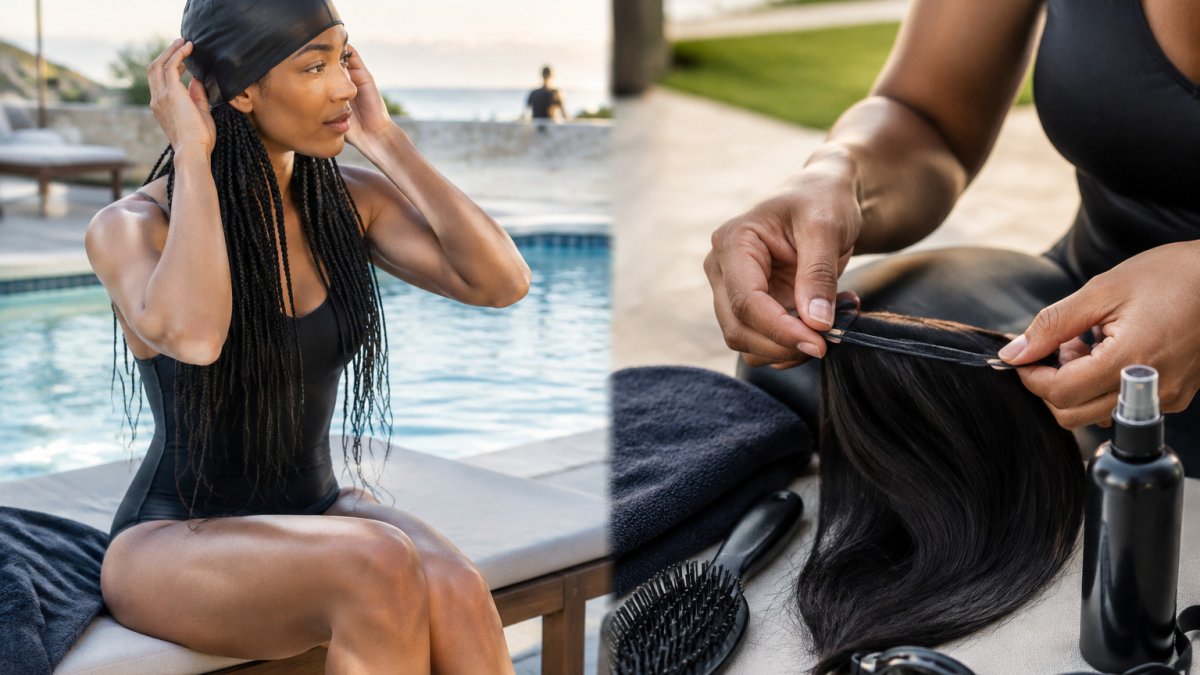
Start by detangling thoroughly. Use a wide-tooth comb or a loop brush, working from the ends upwards in small sections. Pay attention to the area where the weft meets the braid; any knots left here will tighten in water and become difficult to remove. If you find a knot near the attachment, do not pull it; instead, work it loose with your fingers and a little leave-in conditioner.
Next, apply a leave-in conditioner or a light protective oil to the lengths, avoiding the attachment points. The aim is to create a barrier that slows water absorption. Choose a product that is water-resistant rather than heavy and greasy, as heavy products can attract pool chemicals and make the hair tacky. A common pattern is to apply a pea-sized amount to each weft section, focusing on the mid-lengths and ends.
Braid or loosely plait the hair. For flat wefts, a single loose braid or two braids positioned to lie flat against the head works well. Avoid tight braiding at the root, as this can pull on the attachment. The braid should be secure enough to stay in place but not so tight that it distorts the weft. If you have a swim cap, put it on after braiding, ensuring the cap does not roll or bunch the braid underneath.
Check your attachments before you swim. Run your fingers along each weft and feel for any loose stitching, lifting at the bond, or tenderness at the braid base. If anything feels unstable, do not swim; contact your stylist.
Finally, consider the timing. If you are swimming in a chlorinated pool, a quick pre-swim rinse with fresh water can saturate the hair and reduce the amount of chlorine it absorbs.
Preparation makes a real difference, so the steps below set out what to do before you get in the water.
| Step | What to do | Time or frequency |
|---|---|---|
| Detangle | Wide-tooth comb or loop brush, ends upwards | Before every swim |
| Protect lengths | Pea-sized leave-in or light oil, avoid attachments | Before every swim |
| Braid | One loose braid or two flat braids | Before every swim |
| Swim cap | Put on after braiding | Before every swim |
| Check attachments | Feel for loose stitching or lifting | Before every swim |
| Pre-swim rinse | Fresh water to saturate hair | Before chlorinated pool swims |
Swimming in Salt Water: Ocean, Sea and Sun Exposure
Sea swimming brings extra challenges. Salt water dries quickly, and sun exposure adds to the stress on your hair. Rinse your extensions with fresh water as soon as you leave the sea, then dry them gently. Avoid lying in direct sun with wet hair, as heat and salt together can make tangling worse.
Pool and ocean swimming both benefit from the same habit: rinse promptly, condition and protect from the sun.
Washing Hair Extensions After Swimming
Wash your extensions as soon as possible after swimming. The full post-swim maintenance guide covers the rest of the routine. Use a gentle, sulphate-free shampoo and focus on the lengths rather than scrubbing the attachment points. Rinse thoroughly, because any chlorine or salt left behind will keep drying the hair.
Follow with a conditioner on the lengths and detangle with a wide-tooth comb while the hair is wet and slippery.
Drying Your Flat Wefts and Scalp Safely
Thorough drying matters after swimming. The goal is to dry both the extension hair and the attachment area thoroughly without causing heat damage or disturbing the bond.
Start by removing excess water gently. Squeeze the lengths in a soft towel rather than rubbing, working from mid-lengths to ends. For the scalp and braid base, use a second dry towel to press firmly along the partings and under each weft, changing to a dry section of towel as it becomes damp. Avoid vigorous rubbing near the attachment points, as this can loosen the stitching or pull on the braid.
Air-drying is the safest option. Our guide to drying and scalp care explains the rest of the process. If you can, let the hair dry loose in a warm room with good air circulation. A freestanding fan set to a low, cool setting can speed this up without heat. If you must use a hairdryer, keep it on the cool or low-heat setting and hold it at least 15-20 cm away from the attachments. Direct heat on the bond or braid can soften adhesives or weaken the thread over time.
Pay particular attention to the nape and behind the ears, where water tends to collect and airflow is poor. These areas are the last to dry and the most likely to stay damp for hours. Lift each weft gently and feel the braid base with your fingertips; if it feels cool or clammy, it is still damp. Do not tie your hair up, style it or go to sleep until the base is completely dry.
If you notice a musty smell, persistent itchiness or a rash under the wefts, speak to a stylist or a medical professional.
Booking Your Next Flat Weft Fitting for an Active Summer
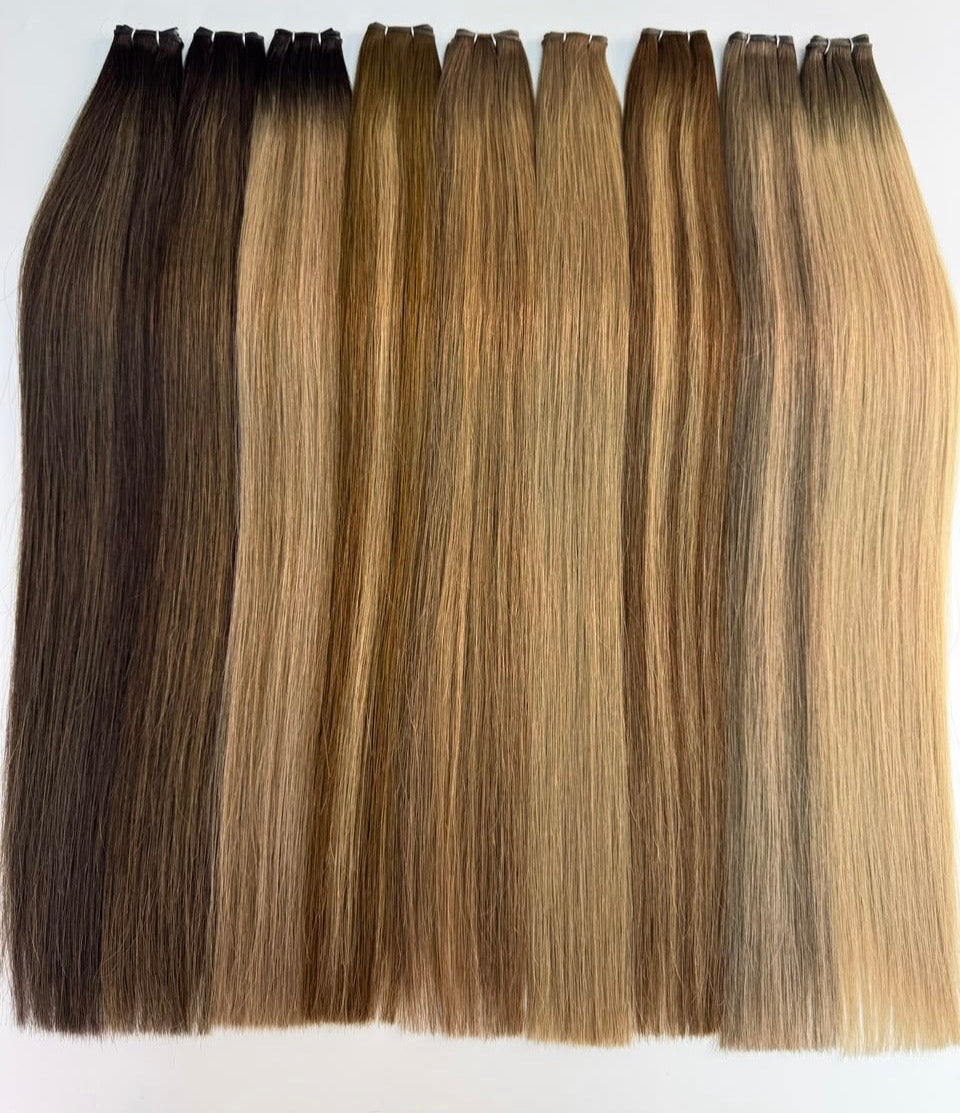
If you are ready to choose your extensions, the FLAT WEFT - 50g is our single-donor, cuticle-intact option, designed to sit close to the scalp with no bulk.
Frequently Asked Questions
Can you swim with flat weft extensions?
Yes, you can swim with flat weft extensions, but it is not risk-free. Water, chlorine and salt can dry the hair, cause tangling and put extra strain on the attachment points, and the effect depends on the condition of your natural hair. Braid your hair loosely before swimming, rinse the extensions with fresh water afterwards and dry them gently. If the wefts feel loose or the braid base is irritated, stop swimming and speak to a stylist before you continue.
Can chlorine damage hair extensions?
Chlorine can dry out hair extensions and make them feel rough and tangled over time. Regular exposure, especially without rinsing, is the main concern. Rinse the extensions with fresh water before and after each swim, use a leave-in conditioner sparingly on the lengths, and avoid leaving them wet in a pool bag. Repeated swimming without care will shorten how long the hair stays in good condition.
Is salt water bad for weft extensions?
Salt water can leave hair dry and stiff, and the residue can make the lengths feel tangled. Rinse your extensions thoroughly with fresh water as soon as you leave the sea, comb gently with a wide-tooth comb once the hair is damp, and let it air-dry. Sun exposure combined with salt water adds to the drying effect, so a leave-in product or hat helps in sunny weather.
Should you wear a swim cap with hair extensions?
A swim cap can reduce how much chlorine and salt water reaches the lengths, which is useful for regular swimmers. It will not fully protect the hair, and a cap that is too tight can put strain on the attachment points, so choose one that fits comfortably. Use a cap alongside a fresh-water rinse afterwards rather than relying on it alone.
