

How to Protect Hair Extensions from Chlorine
Last Updated: November 9, 2026
Quick Summary
To protect hair extensions from chlorine, pre-soak them in fresh, non-chlorinated water and apply a sulphate-free leave-in conditioner to the mid-lengths and ends before swimming. Rinse thoroughly with cool fresh water straight after leaving the pool, then wash with sulphate-free shampoo.
- Dry hair soaks up chlorinated water first, so saturate extensions with fresh water before swimming.
- Keep leave-in conditioner off roots and tape tabs to prevent bond slippage.
- Tie hair in a high ponytail or low plait, never tightly while wet.
- Rinse for at least two minutes with cool water immediately after leaving the pool.
- Flat wefts are the safest option for frequent swimmers as no glue weakens.
Table of Contents
- Why Chlorine Damages Hair Extensions
- Pre-Swim Prep: How to Protect Hair Extensions Before Entering the Water
- Swimming with Hair Extensions: Styles That Stay Put
- Choosing and Using a Hair Extensions Swimming Cap
- How to Wash Hair Extensions After Swimming
- Hair Extensions Care After Swimming: Drying and Daily Maintenance
- Match Your Method to Your Extension Type
- Shop Chlorine-Ready Extensions
- Frequently Asked Questions
Why Chlorine Damages Hair Extensions
Chlorine is one of the fastest ways to ruin a set of hair extensions. Pool water strips moisture from the hair cuticle, weakens bonds, and leaves extensions dry, matted and dull. Most of this damage is preventable with the right routine.
Here is what actually happens. Chlorine is a disinfectant, and it does not distinguish between bacteria and hair. It lifts the cuticle scales and pulls out the natural oils that keep hair supple.
How Chlorine Interacts with Cuticles and Bonds
Chlorine oxidises the hair cuticle, the protective outer layer that keeps moisture in and tangles out. Once those scales lift, the hair shaft loses hydration fast. It feels rough, looks dull, and tangles at the slightest movement.
Bonds suffer too. Keratin bonds and tape adhesive both soften and weaken with repeated chemical exposure. The British Swimming guidance on pool water treatment confirms that chlorine levels are maintained for hygiene, which is exactly why hair needs protecting from it.
Pre-Swim Prep: How to Protect Hair Extensions Before Entering the Water
The best way to protect hair extensions from chlorine is to prep before you get wet. A two-minute routine makes the difference between hair that survives the season and hair that needs replacing. The pre-soak and the product barrier both matter, so it is worth getting each right rather than rushing one.
The Pre-Soak Method
Soak your extensions in clean, non-chlorinated fresh water before swimming. Dry hair acts like a sponge, so it soaks up whatever liquid it meets first. Saturate the hair with fresh water and there is far less room for chlorinated water to get in. The Silent Spring Institute's 2026 research on hair extension chemicals shows extension hair can carry chemical residues, so keeping pool chemicals out matters more than most people realise.
How you pre-soak depends on your bond type. With tape extensions, wet the mid-lengths and ends only and keep the tape tabs dry, a soaked tape tab loses grip and can slide. With keratin bonds, a quick dip is enough; prolonged soaking softens the bond. Nano rings and flat wefts tolerate a fuller soak because there is no glue to weaken. A simple approach is to pre-soak in a basin or under a tap, squeeze out the excess, and then apply your barrier product.
Leave-In Conditioner and UV Protection
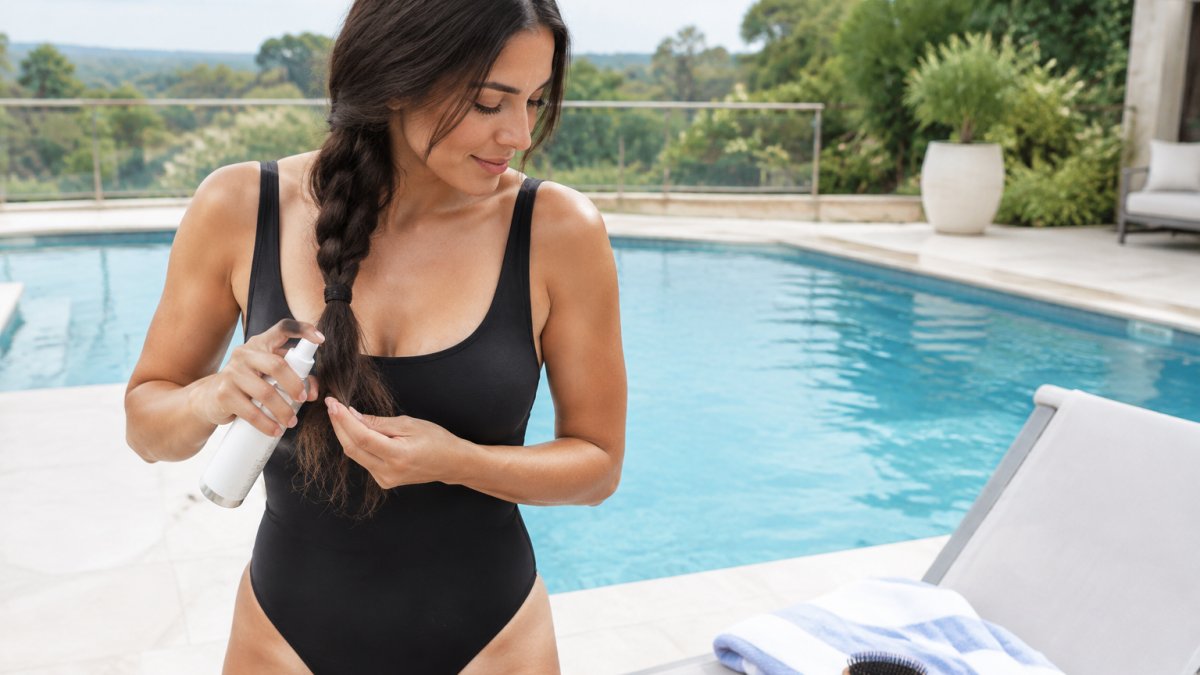
Apply a leave-in conditioner to the mid-lengths and ends before you swim. Choose a sulphate-free formula and avoid the roots and bonds, which can loosen if they get slippery.
Read the ingredient list of any protection spray before you buy, and choose a sulphate-free formula.
Sun exposure can add to dryness, so wearing a hat when you are out of the water is a sensible habit.
Watch out: applying leave-in conditioner to the roots or directly onto tape tabs is one of the most common causes of bond slippage after a swim session, keep the product on the mid-lengths and ends only.
Swimming with Hair Extensions: Styles That Stay Put
Loose hair in a pool is a recipe for matting. Tie extensions up before you swim to keep them contained and reduce contact with chlorinated water.
A high ponytail works well for tape and nano bonds because it keeps the hair off the neck. A low plait is gentler on keratin bonds and reduces pulling at the root. Both styles keep the hair tangle-free and out of your face.
- High ponytail: good for tape and nano extensions
- Low plait: best for keratin bonds and fine hair
- Loose bun: a quick option for short pool sessions
Never tie extensions tightly while wet. Wet hair stretches, and a tight band on wet hair can pull at the bonds.
Choosing and Using a Hair Extensions Swimming Cap
A hair extensions swimming cap is the simplest physical barrier you can use. It keeps chlorinated water off the hair and holds everything in place. Look for a cap with a little extra room so it does not crush the bonds.
Silicone caps give the best seal. Fabric caps are gentler but let more water through. Neither is perfect, so treat a cap as one layer of protection, not a replacement for pre-soaking.
How to Wash Hair Extensions After Swimming
Rinse your extensions with fresh water the moment you leave the pool. This is the single most important post-swim step. It washes out chlorine before it can dry into the hair. Chlorine continues to oxidise the cuticle while it sits in the hair, so the faster you rinse, the less damage accumulates.
Then follow this wash routine:
- Rinse thoroughly with cool fresh water for at least two minutes, working from the bonds downwards
- Wash with a sulphate-free shampoo, focusing on the mid-lengths and ends
- Skip heavy conditioner at the roots to protect the bonds
- Rinse again until the water runs clear
- Blot gently with a microfibre towel
Wash extensions after every swim where possible. Leaving chlorine in the hair overnight is how dryness and discolouration set in.
Emergency Recovery: When Extensions Have Already Been Exposed
If your extensions have already been in chlorinated water, or you did not rinse straight away, you need a damage-control plan rather than a routine wash. Work through these steps in order.
First, rinse immediately with cool fresh water, even if the hair has already dried. Do not shampoo yet; the priority is to flush out residual chlorine. Second, apply a deep conditioning mask to the mid-lengths and ends and leave it for 10 to 15 minutes. Look for a mask with hydrolysed keratin or silk protein rather than heavy oils, which can loosen tape and keratin bonds. Third, detangle with a wide-tooth comb while the conditioner is still in, working from the ends upward. Fourth, rinse and blot dry.
For tape extensions, check the tabs once the hair is dry. If a tab has lifted or feels tacky, do not re-style with heat, book a maintenance check, because a weakened tape tab will not hold. For keratin bonds, feel for softness at the bond point; a bond that has gone soft needs professional attention rather than more product. Nano rings and flat wefts rarely need emergency intervention beyond the mask, which is one reason they suit frequent swimmers.
Watch out: do not apply heat to extensions immediately after chlorine exposure. Straighteners and dryers on already-weakened bonds can cause the bond to slip or the hair to snap, so let the hair air-dry where possible and keep heat styling to a minimum for at least 24 hours.
Hair Extensions Care After Swimming: Drying and Daily Maintenance
Hair extensions care after swimming comes down to drying and daily habits. Never rub wet extensions with a rough towel. Rubbing roughs up the cuticle and causes matting. Instead, squeeze out excess water and blot with a microfibre towel.
Detangle gently with a wide-tooth comb, working from the ends upward. Let the hair air-dry where you can, and keep heat styling to a minimum. For a full routine between swims and washes, see our guide to maintaining hair extensions for long wear. If your extensions tangle easily after pool days, our breakdown of why hair extensions tangle covers the causes and fixes.
A few daily habits protect your investment:
- Brush before bed and before swimming
- Keep a leave-in conditioner in your bag for post-swim top-ups
- Book regular maintenance checks for your bond type
Match Your Method to Your Extension Type
Different extension types need different chlorine care. The bond method decides how much water exposure your hair can take and how you should protect it.
- Keratin bonds: avoid heavy soaking and keep leave-in off the bonds, which soften with moisture
- Tape extensions: pre-soak well and dry the tapes fully after swimming
- Nano bonds: metal rings resist water better, but the hair still needs conditioning
- Flat wefts: the safest option for frequent swimmers because there is no glue or heat bond to weaken
If you are weighing up bond types, our comparison of nanobond vs keratin bond extensions explains which suits a swimming-heavy routine. For specific questions about your own set, our frequently asked questions page has quick answers.
The bond method decides how much water exposure your extensions can take and how you should protect them.
| Extension type | Chlorine care | Key point |
|---|---|---|
| Keratin bonds | Avoid heavy soaking; keep leave-in off bonds | Bonds soften with moisture |
| Tape extensions | Pre-soak well and dry tapes fully after swimming | Soaked tape tabs lose grip |
| Nano bonds | Metal rings resist water better | Hair still needs conditioning |
| Flat wefts | Safest option for frequent swimmers | No glue or heat bond to weaken |
Shop Chlorine-Ready Extensions
The right extensions make chlorine care far easier. Our single-donor virgin hair has aligned cuticles, which helps it resist tangling. Our hair comes with a full chain of traceability from donor to delivery.
Our NANOBOND extensions (£127.00) use the smallest, most discreet bond and suit fine to medium hair. The FLAT WEFT (£137.00) sits closest to the scalp with no bulk, making it our top pick for regular swimmers. Both have a 12 to 24 month lifespan.


Browse the full range on our products page to find your match.
Chlorine does not have to mean the end of your extensions. With a pre-soak, a leave-in barrier, a swim cap and a proper wash routine, your hair will hold up season after season. At QUEEN OF GOOD HAIR, we supply 100% single-donor virgin hair with cuticle-intact strands, a 12 to 24 month lifespan, and no silicone coating, so your extensions stay strong through every swim. Get started with QUEEN OF GOOD HAIR and keep your extensions looking fresh all summer.
Frequently Asked Questions
Can you swim in a swimming pool with hair extensions?
Yes, you can swim with hair extensions, but you need to prepare them first. Wet the hair with fresh water before entering the pool so the cuticles absorb clean water rather than chlorinated water. Apply a leave-in conditioner to the mid-lengths and ends, then tie the hair in a loose plait or low ponytail. A swimming cap adds another layer of protection. After swimming, rinse immediately with fresh water and wash with a sulphate-free shampoo. This routine helps protect hair extensions from chlorine damage and keeps bonds secure.
Does chlorine damage hair extensions?
Chlorine strips moisture from the hair cuticle, leaving extensions dry, brittle and prone to tangling. It can also weaken the bonds on tape, nano and keratin extensions, increasing the risk of slippage. Chlorine can interact with residues left on hair from manufacturing. The damage is cumulative, so repeated exposure without protection shortens the lifespan of your extensions. A pre-soak and prompt rinsing after every swim are your best defences.
How do you stop hair extensions tangling in the pool?
Tie extensions in a loose low plait or a high ponytail before swimming; loose styles reduce friction and keep strands together. Never brush wet extensions vigorously. Instead, use a wide-tooth comb to detangle gently from the ends upwardss after rinsing. A swimming cap also prevents tangling by keeping hair contained. If your extensions do tangle, apply a small amount of leave-in conditioner and work through the knot with your fingers before combing. Single-donor, cuticle-intact hair is designed to resist matting.
How long should you wait to wash hair extensions after swimming?
Wash your hair extensions as soon as possible after swimming, ideally within an hour. Chlorine continues to dry the hair the longer it sits, and salt water can crystallise as it evaporates. A fresh water rinse immediately after leaving the pool removes most surface chlorine. Then follow with a sulphate-free shampoo and conditioner to restore moisture. If you cannot wash straight away, rinse thoroughly with fresh water and apply a leave-in conditioner until you can complete a full wash.
