

Maintaining Hair Extensions for Longevity: 2026 Guide
Table of Contents
- Why Hair Extensions Longevity Starts With What You Buy
- How Long Do Hair Extensions Last?
- How to Wash Hair Extensions Without Shortening Their Life
- How to Brush Hair Extensions Safely
- How to Prevent Hair Extensions From Tangling
- Heat, Sleep and Styling Habits That Protect Hair Extensions Longevity
- Frequently Asked Questions
Last Updated: 8 October 2026
Why Hair Extensions Longevity Starts With What You Buy
Maintaining hair extensions for longevity begins long before the first wash or brush stroke. It starts with the hair itself. According to the Good Salon Guide on hair extension aftercare, the quality of the donor hair and how its cuticles are aligned determines whether a set lasts months or falls apart within weeks.
Hair extensions are strands of donor hair attached to your natural hair using methods such as nano rings, tape, keratin bonds, or wefts. The single biggest factor in how long they last is whether the cuticles are intact and aligned in one direction.

At QUEEN OF GOOD HAIR, we source 100% single-donor virgin hair with fully intact cuticles. This means every strand in a bundle comes from one donor and runs in the same direction, which prevents the friction that causes tangling and matting.
Single-Donor, Cuticle-Intact Hair vs Coated Alternatives
Cuticle-intact hair is hair that still has its outer protective layer intact and aligned from root to tip. This natural alignment lets strands glide past each other instead of catching and knotting.
Coated alternatives use a silicone layer to fake that smoothness. The coating washes away after a few weeks, exposing stripped, misaligned cuticles underneath. That is why so many people find their extensions matted within a month.
How Long Do Hair Extensions Last?
Most quality hair extensions last between 12 and 24 months with proper care, though the attachment method affects how often you need maintenance appointments. The hair itself can outlast several refits if you look after it.
Cheaper, coated hair often degrades within three to six months. The difference comes down to cuticle integrity, not luck.
| Method | Typical Refit Interval | Full Lifespan | Best For |
|---|---|---|---|
| Nano rings | 6-8 weeks | 12-24 months | Fine to medium hair |
| Tape | 6-8 weeks | 12-24 months | Fast application |
| Keratin bond | 4-5 months | 12-24 months | Longest wear between refits |
| Flat weft | 6-8 weeks | 12-24 months | Seamless volume |
Lifespan by Method: Nano, Tape, Keratin and Weft
Our NANOBOND extensions use the smallest bond on the market, making them invisible at the root and ideal for finer hair types. KERATIN BOND extensions are the longest-lasting attachment, with clients typically going four to five months between appointments.

Tape and flat weft methods sit flat against the scalp and are reusable across multiple applications. All four methods share the same 12-24 month lifespan when the underlying hair is cuticle-intact.
How to Wash Hair Extensions Without Shortening Their Life
Wash hair extensions no more than twice a week, always with sulphate-free shampoo, and never scrub the bonds. Overwashing strips natural oils and loosens attachments faster than almost anything else.
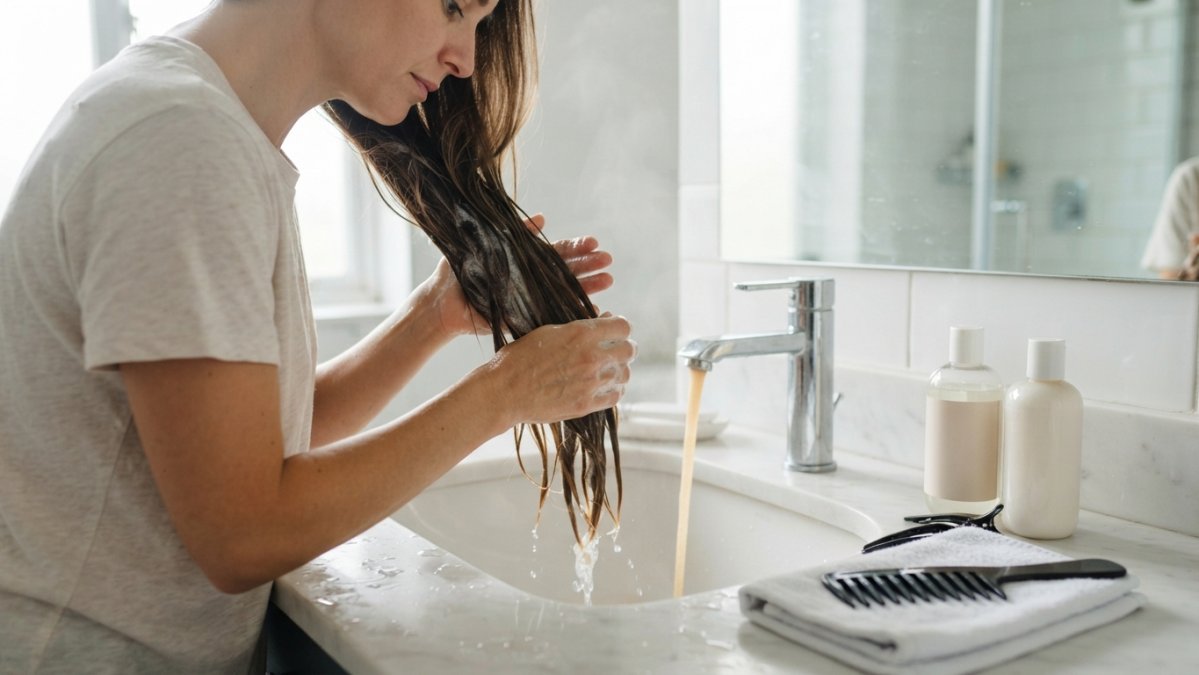
Follow this routine:
- Brush thoroughly before washing to remove tangles
- Wet hair with lukewarm water, never hot
- Apply sulphate-free shampoo to the scalp only, working downward
- Rinse and apply conditioner from mid-length to ends, avoiding bonds
- Squeeze gently with a towel, never rub
- Air dry where possible
How to Brush Hair Extensions Safely
Brush hair extensions two to three times daily using a loop-bristle or soft-bristle brush, starting at the ends and working upward in small sections. Never brush wet extensions from the root down.
Hold the mid-length of the hair with one hand while brushing below it. This stops the pull transferring to the bonds. For tape and keratin methods, avoid brushing directly over the attachment point.
- Use a loop-bristle brush or wide-tooth comb
- Work in small sections, ends first
- Never tug through knots, separate them with your fingers
- Brush before bed and after washing
How to Prevent Hair Extensions From Tangling
Preventing tangling comes down to three habits: keeping the hair moisturised, braiding it before sleep, and never letting it dry loose. Dry, unaligned hair catches on itself and knots.
Use a light leave-in conditioner or argan oil on the mid-lengths and ends each day. At night, loosely braid or plait the hair and secure it with a silk scrunchie. A silk or satin pillowcase reduces friction overnight.
The NHS guidance on hair care notes that harsh chemical treatments and excessive heat weaken hair structure over time, advice that applies equally to extensions.
Heat, Sleep and Styling Habits That Protect Hair Extensions Longevity
Limit heat styling to 180°C or below and always use a heat protectant. High heat weakens the protein structure of donor hair just as it damages your own, and repeated exposure shortens the lifespan of any set.
Sleep with hair braided and never go to bed with wet extensions. Wet hair stretches and the bonds weaken. If you colour your extensions, book a professional consultation first, as not every method tolerates lightening.
Our INVISI TAPE extensions and FLAT WEFT extensions are both colour-tolerant, which means you can tone or customise them without compromising the cuticle.

A common mistake is over-oiling the roots. Oil breaks down tape adhesive and keratin bonds. Keep all products at least 5cm away from the attachment point.
Maintaining hair extensions for longevity is less about expensive products and more about consistent habits: gentle washing, careful brushing, and protecting the hair overnight. The single biggest upgrade you can make is starting with cuticle-intact, single-donor hair that does not need coating to look good. At QUEEN OF GOOD HAIR, every bundle comes with full traceability, a 12-24 month lifespan, and no silicone coating, so your investment holds its value. Shop all and start with hair built to last.
Frequently Asked Questions
How do you make hair extensions last longer?
Start with quality. Single-donor, cuticle-intact hair holds up far better than coated or mixed-donor bundles because the cuticles stay aligned and resist tangling. From there, wash with sulphate-free shampoo no more than once or twice a week, brush from the ends upward with a looped bristle brush, and always tie hair in a loose braid before bed. These habits protect the hair extensions longevity you paid for.
How often should you wash hair extensions?
Once or twice a week is enough for most people. Washing more often strips moisture and stresses the bonds. Use lukewarm water and a sulphate-free shampoo, and focus on the scalp rather than scrubbing the lengths. Always condition the mid-lengths and ends, but keep conditioner away from the bonds themselves, as it can loosen tape, keratin and nano rings over time.
Can you sleep with hair extensions in?
Yes, but how you sleep matters. Loosely braid or plait your hair before bed to stop the strands rubbing together overnight, which is a common cause of matting. A silk or satin pillowcase reduces friction and helps prevent hair extensions from tangling. Avoid going to bed with wet extensions, as damp bonds are weaker and more prone to slipping.
What products should you avoid on hair extensions?
Skip sulphate-heavy shampoos, which dry out the hair and break down bonds, and avoid silicone-heavy serums that coat the strands and hide damage rather than preventing it. Leave-in treatments are fine on the mid-lengths and ends, but keep oils, masks and conditioner away from the roots where the bonds sit. For fine hair especially, lightweight products stop extensions looking bulky.
Can you use heat tools on hair extensions?
You can, but keep the temperature moderate and always use a heat protectant first. Keratin-bonded and tape extensions tolerate styling well, while nano bonds need more care around the root. Never apply direct heat to the bond itself. Limiting straighteners and curling wands to a few times a week, and letting hair air-dry when you can, will noticeably extend how long your extensions last.
How long do different types of hair extensions last?
With good aftercare, single-donor virgin hair lasts 12 to 24 months, while the bond method determines how often you revisit the salon. Keratin bonds typically need refitting every 4 to 5 months, nano rings and tape extensions around 6 to 8 weeks. Tape extensions can be reused for up to 8 to 12 applications, making them a practical choice for clients who want fewer full replacements.