

7 Best Hair Extensions for Swimming That Survive Chlorine
Last Updated: November 12, 2026
Quick Summary
The best hair extensions for swimming are clip-ins for occasional dips, as you remove them before entering the water, while flat wefts suit regular swimmers who want a secure, low-bulk option under a cap. Whichever method you choose, rinse within an hour of leaving the water and air-dry fully.
- Tape extensions suit swimmers who swim a few times a month and want control.
- Keratin bonds and nano rings stay secure in water but are slower to dry.
- A swim cap reduces water exposure but is not waterproof.
- Rinse extensions within an hour of leaving the water to flush out chlorine or salt.
- Single-donor hair is listed with a 12- to 24-month lifespan with good care.
Table of Contents
- Can You Swim With Hair Extensions? The Honest Answer
- What Type of Hair Extensions Are Best for Swimming?
- How to Protect Hair Extensions When Swimming: Before, During and After
- Washing Hair Extensions After Swimming: A Step-by-Step Routine
- How Long Can You Swim With Hair Extensions? Water Exposure and Longevity
- Chlorine, Salt Water and Holiday Swimming: What Actually Damages Extensions
- Choosing Extensions That Hold Up: What to Look For
- Shop the Range Built for Real Water Exposure
- Frequently Asked Questions
Can You Swim With Hair Extensions? The Honest Answer
Yes, you can swim with hair extensions, but how well your hair extensions for swimming survive the water depends entirely on the method you wear and how you care for them afterwards. Water is not the enemy. Poor preparation and skipped aftercare are.
The best hair extensions for swimming are the ones you can secure tightly, dry thoroughly and refit without stress. Clip-in extensions win on flexibility because you take them out before you get in. Bonded and sewn methods stay put but need more careful drying.
Chlorine and salt water do not dissolve a bond overnight. Repeated soaking, poor rinsing and rough towel drying do the damage over weeks. Get those three things right and your extensions will handle a normal swimming habit.
Below, we break down each method by swimming frequency, then give you a full before, during and after routine you can follow on holiday or at your local pool.
What Type of Hair Extensions Are Best for Swimming?
There is no single best method for every swimmer. The right choice depends on how often you swim, how much time you will spend on aftercare, and whether you want a removable or semi-permanent option. Below is a practical comparison by swimming frequency, followed by method-specific trade-offs.
Comparison by swimming frequency
| Swimming frequency | Best-suited methods | Why | Trade-offs |
|---|---|---|---|
| Occasional dips (a few times a month) | Clip-ins | You remove them before entering the water, so there is no water exposure at all | Cannot be worn in the water; require fitting each time |
| Regular pool training (1-3 times a week) | Tape extensions, flat wefts | Secure enough for laps, easier to dry than individual bonds | Tapes need careful drying at the root; wefts need thorough rinsing underneath |
| Frequent sea or open-water swimming | Flat wefts, nano rings | Hold firmly with less bulk under a cap; nano rings suit fine hair | Salt water and sun increase drying time; bonds need separating after every swim |
| Daily swimming | Flat wefts (with a strict rinse-and-dry routine) | The most manageable for frequent wetting | Even the best method will suffer without consistent aftercare |
Tape extensions: fast to fit, easy to remove
Tape extensions are flat, lightweight and quick to fit. That makes them a strong pick if you swim a few times a month and want something you can manage at home. Our INVISI TAPE - 50g strips sit flat against the scalp. Dry them fully after every swim and they will keep their grip.
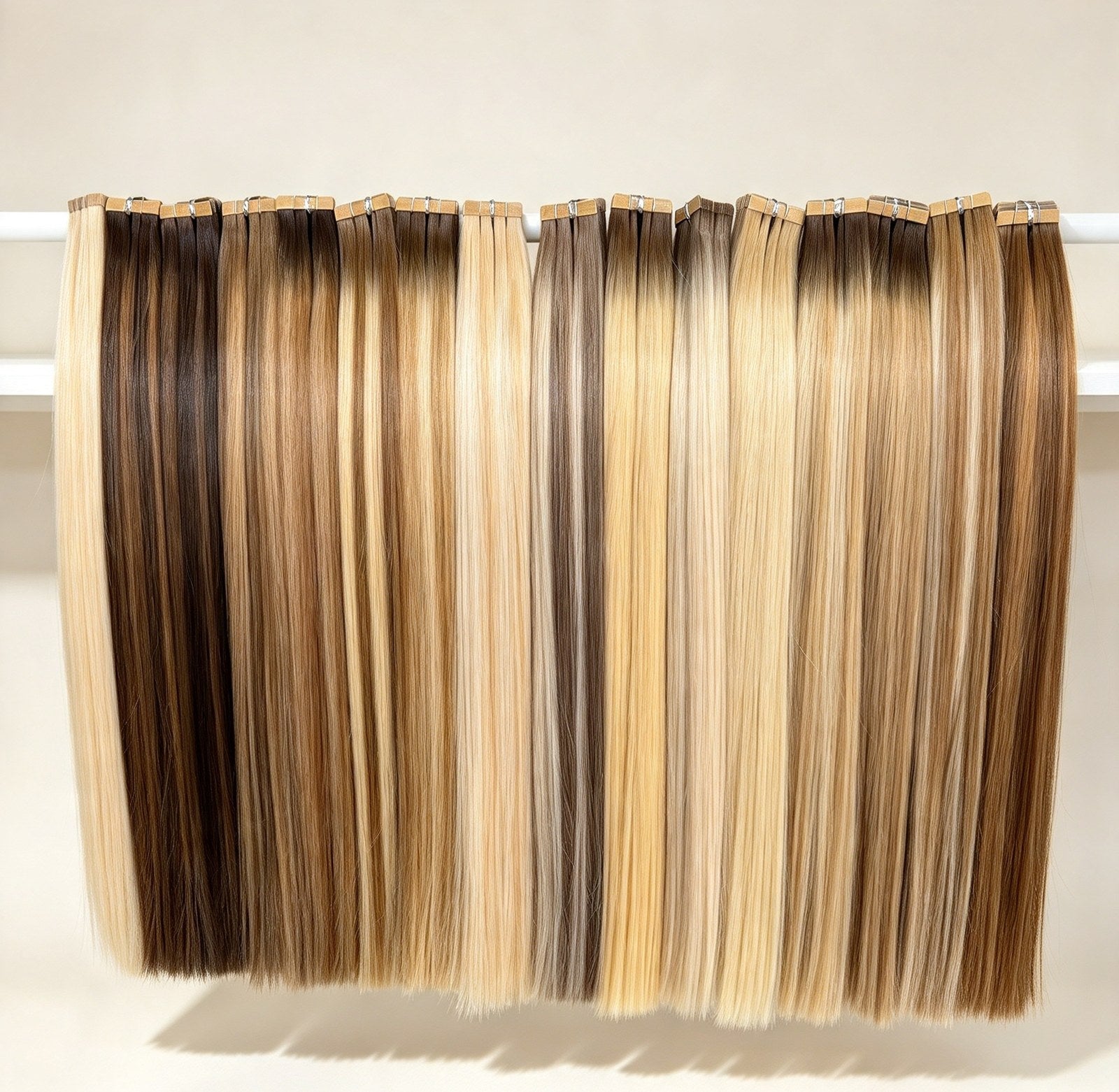
Best for: Occasional swimmers who want control. Skip if: You swim daily and dislike drying time.
Keratin bonds and nano rings: secure but slower to dry
Keratin bonds fuse individual strands with gentle heat. Nano rings use a tiny discreet bond with no glue and no heat. Both stay firmly in place in the water. The trade-off is drying. Water sits inside the bond, so you need to separate strands and dry carefully. Our KERATIN BOND - 50g suits clients who want a long-lasting fix, while NANOBOND - 50g is the kinder option for fine hair.
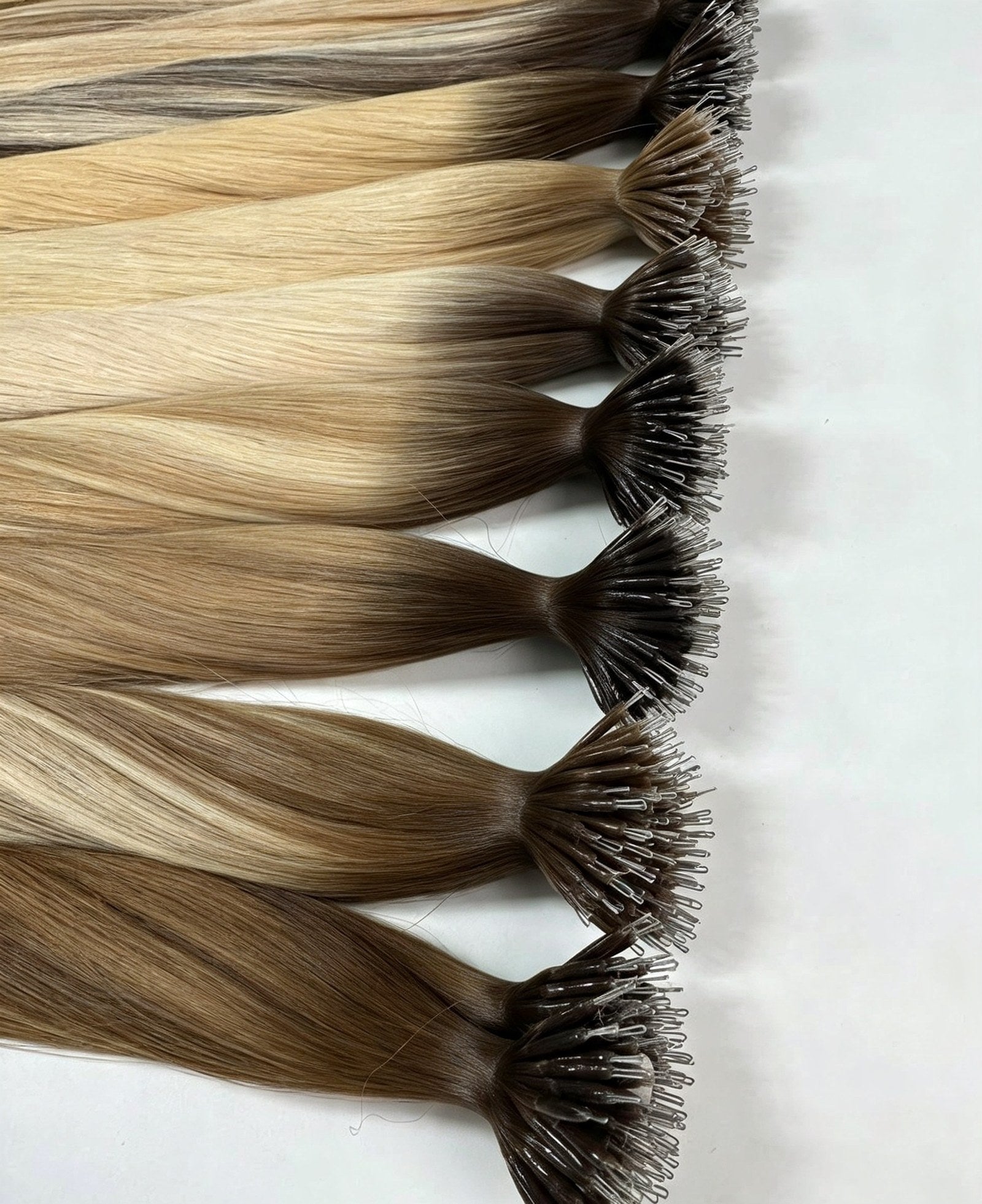
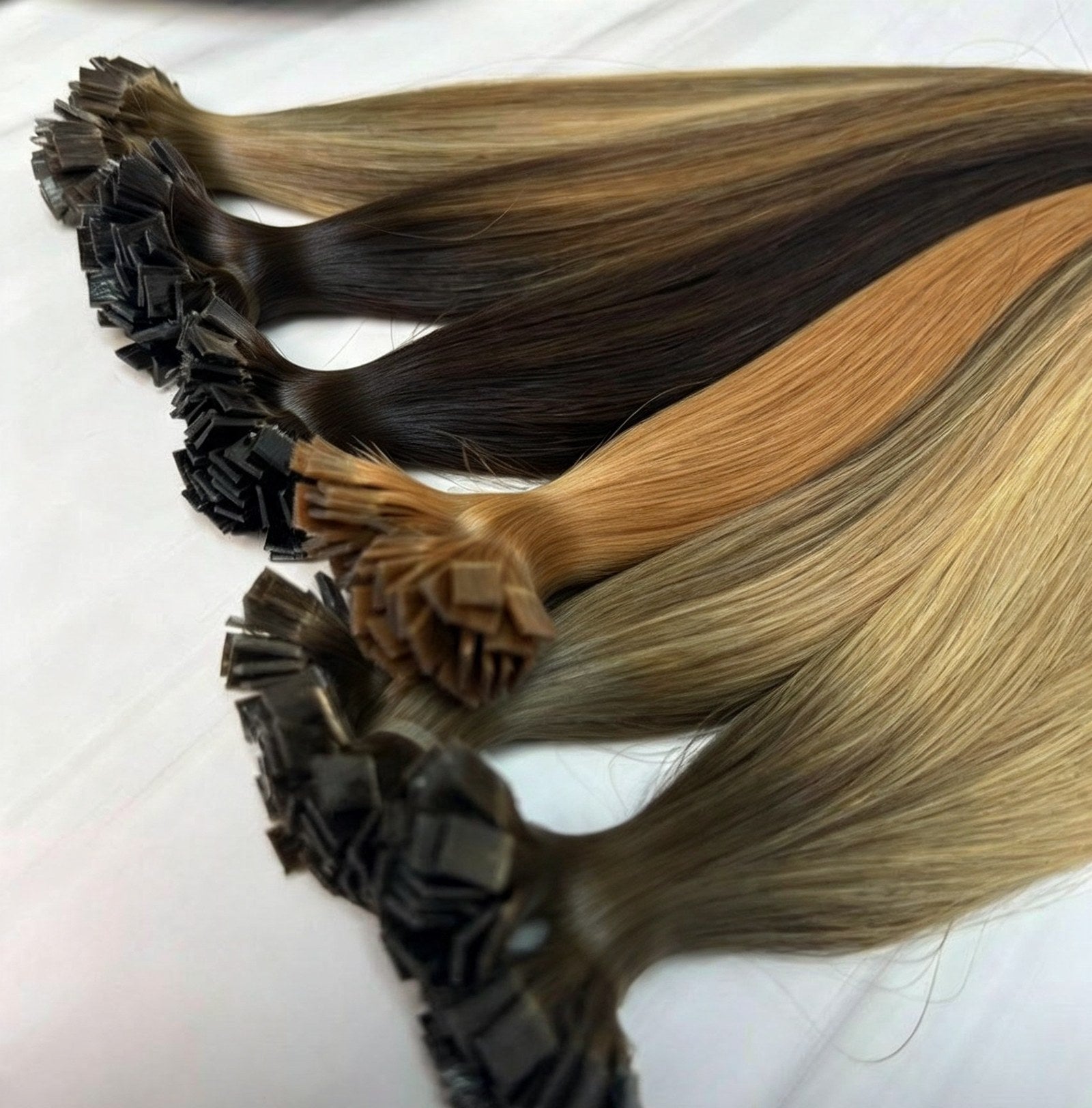
Best for: Swimmers who want a secure, long-wear bond. Skip if: You want a quick wash-and-go routine.
Flat wefts: the compromise for frequent swimmers
Flat wefts sit closer to the scalp than any other weft method. No bulk, no bumps, and the hair moves like your own. For frequent swimmers, this is the middle ground. A weft is secure, comfortable under a cap and easier to dry than individual bonds. Our FLAT WEFT - 50g is built for exactly this.
Best for: Regular swimmers who want volume without bulk. Skip if: You prefer a fully removable option.
How water exposure affects attachment longevity
Chlorine and salt water do not dissolve a bond in one swim. The damage is cumulative: repeated soaking without rinsing weakens tapes and loosens bonds over weeks. The key is to rinse and dry thoroughly after every swim, and to book a refit as soon as you notice any slipping rather than waiting for a scheduled appointment.
NHS guidance on healthy hair and scalp care is a useful reminder that wet hair is more fragile, so handling matters as much as the method itself.
How to Protect Hair Extensions When Swimming: Before, During and After
Protection starts before you leave the changing room. A tight plait, a well-fitted silicone cap and a rinse straight after are the three habits that keep extensions healthy. Below is a complete routine you can follow whether you are at a pool, the sea, a lake or a hot tub.
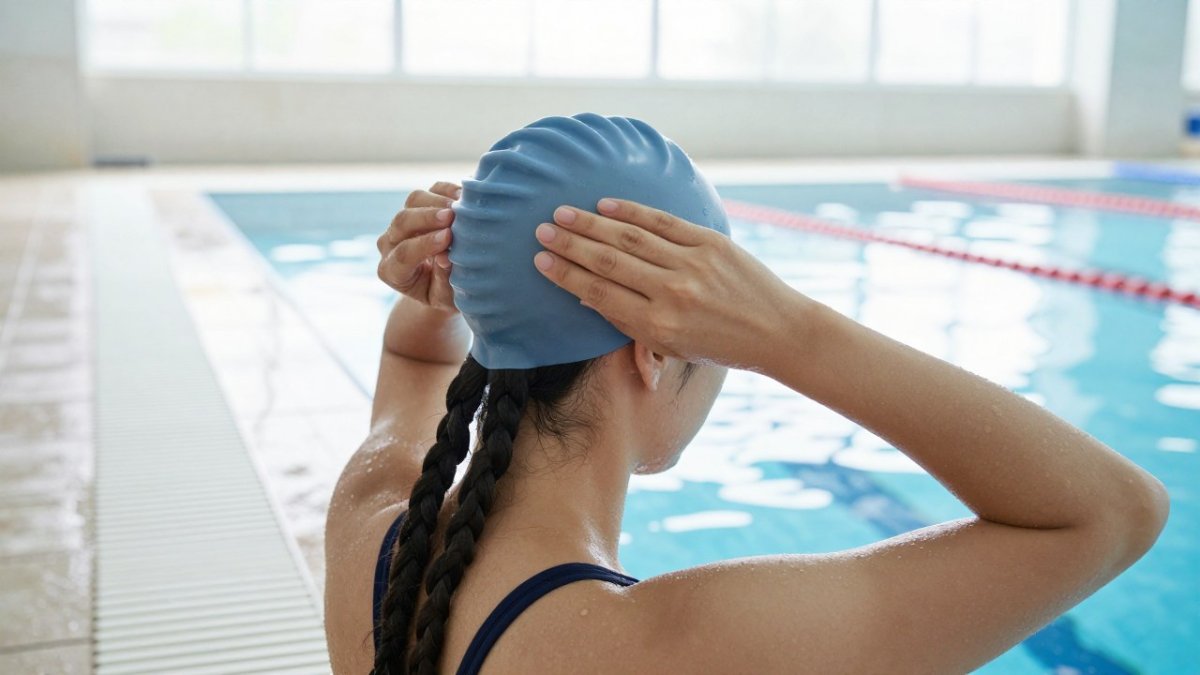
Before you get in: prep and a realistic swim cap fit
A swim cap helps, but it is not waterproof. Water always seeps under the edge. Treat the cap as a reducer, not a shield. For long or extension-heavy hair, a larger cap or a cap designed for long hair will contain the hair better and reduce drag. Plait hair into a low plait to limit tangling, and wet hair with clean water first so it absorbs less chlorine or salt. Avoid tight buns that put tension on attachment points.
For a deeper walkthrough, read our guide on how to protect hair extensions from chlorine.
In the water: plaits, positions and pool chemicals
Keep hair plaited and close to the head. Loose hair floats, tangles and drags on the bonds. Watch out: never leave wet extensions tied in a tight bun for hours after swimming. Trapped moisture and tension are what cause matting and pull at the roots.
Different water contexts need slightly different approaches:
- Pools: Chlorine is the main concern. Rinse before and after. If you swim regularly, consider a leave-in conditioner before putting on your cap.
- Sea: Salt water draws moisture out and encourages tangling. Rinse with fresh water as soon as you leave the beach. Sun exposure adds dryness, so cover hair when you can.
- Lakes and open water: These can contain sediment and bacteria. Rinse thoroughly afterwards and wash with a sulphate-free shampoo.
- Hot tubs: Heat and chemicals can be harsher than a pool. Keep hair out of the water where possible, or rinse immediately afterwards.
After swimming: a step-by-step rinse and dry routine
Rinse within an hour of leaving the water. This single habit does more for extension longevity than any product you can buy.
- Rinse with cool clean water to flush out chlorine or salt.
- Detangle gently with a wide-tooth comb, working from ends up.
- Wash with a sulphate-free shampoo, focusing on the scalp.
- Condition the mid-lengths and ends, avoiding the bonds.
- Rinse thoroughly and press water out with a towel.
- Air-dry fully, separating strands so no moisture sits at the roots.
Skip heat styling until the hair is completely dry. Watch out: if you notice matting that will not comb out, or attachments that feel loose, contact your extensionist rather than trying to repair it yourself.
Washing Hair Extensions After Swimming: A Step-by-Step Routine
Rinse within an hour of leaving the water. This single habit does more for extension longevity than any product you can buy.
- Rinse with cool clean water to flush out chlorine or salt
- Detangle gently with a wide-tooth comb, working from ends up
- Wash with a sulphate-free shampoo, focusing on the scalp
- Condition the mid-lengths and ends, avoiding the bonds
- Rinse thoroughly and press water out with a towel
- Air-dry fully, separating strands so no moisture sits at the roots
Skip heat styling until the hair is completely dry.
How Long Can You Swim With Hair Extensions? Water Exposure and Longevity
Our single-donor hair is listed with a 12- to 24-month lifespan with good care.
The real risk is cumulative. Daily swimming with no rinsing will weaken bonds and dry out the hair over time.
Chlorine, Salt Water and Holiday Swimming: What Actually Damages Extensions
Chlorine strips moisture and leaves hair dry and brittle. Salt water draws moisture out and encourages tangling. Neither destroys extensions in one swim, but both need rinsing.
Holiday swimming adds sun and heat. Cover hair when you can, rinse after every dip and never sleep on wet extensions. A common mistake is leaving salt water in overnight, which is when matting starts.
Choosing Extensions That Hold Up: What to Look For
Look for cuticle-intact, single-donor hair with no silicone coating. Aligned cuticles help resist tangling.
Check the source. Ask how the hair was collected and whether the supplier can trace it. Our full chain of traceability runs from donor to delivery, and our hair is 100% single-donor virgin hair.
Watch out: silicone-coated hair feels smooth at first but dries out and mats once the coating washes away.
Shop the Range Built for Real Water Exposure
Swimming and great extensions can coexist. Choose the right method, plait it, cap it, rinse it and dry it fully. That routine protects your investment and keeps your hair looking natural in and out of the water.
At QUEEN OF GOOD HAIR, our hair is ethically sourced, single-donor and cuticle-intact, with a 12- to 24-month lifespan and no silicone coating. Our tape, weft, keratin and nano options each suit a different swimming habit, so you can match the method to your routine.
Get started with QUEEN OF GOOD HAIR and find extensions that hold up to real life, water included.
Ready to swim without worrying about your hair? Explore our full range of ethically sourced, single-donor extensions and pick the method that fits your routine.
Frequently Asked Questions
Can you swim with hair extensions?
Yes, you can swim with hair extensions, but the method matters. Clip-in extensions are the simplest option because you remove them before you get in the water. For semi-permanent methods such as tape, keratin bonds, nano rings or flat wefts, the key is preparation: plait the hair, wear a fitted silicone swim cap, and rinse thoroughly afterwards. Chlorine and salt water both dry out hair,
What type of hair extensions are best for swimming?
It depends on how often you swim. For occasional holiday swimming, tape extensions are practical because they are quick to fit. For regular pool sessions, flat wefts sit close to the scalp. Keratin bonds and nano rings are the most secure for active swimmers, though they take longer to dry at the root. Clip-ins remain the best choice for anyone who swims several times a week, since they come out entirely.
Can you swim in chlorine with hair extensions?
You can, but chlorine is the main threat to extension longevity. It strips moisture from the hair shaft, leaving it dry and brittle, and repeated exposure weakens attachment points over time. Wet the hair with clean water before entering the pool so it absorbs less chlorinated water, wear a silicone swim cap, and rinse within an hour of getting out. Use a sulphate-free shampoo and a deep conditioner on the mid-lengths and ends, and keep conditioner off the bonds themselves.
How should you wash hair extensions after swimming?
Rinse with clean, cool water as soon as you can after leaving the pool or sea. Then wash with a sulphate-free shampoo, working it gently down the lengths rather than scrubbing at the roots. Apply conditioner from mid-length to ends only, avoiding the bonds or tape. Detangle with a wide-tooth comb while the hair is still wet, then blot with a microfibre towel and air-dry where possible. Avoid heat styling until the hair is fully dry, and book a refit check with your stylist if the bonds feel loose.
