

Why Do Hair Extensions Thin Out? Causes & Fixes
Table of Contents
- Why Hair Extensions Thin Out: The Main Causes
- How to Stop Hair Extensions from Shedding
- How Long Do High-Quality Hair Extensions Last?
- Hair Extension Maintenance Tips for Thickness and Longevity
- Which Extension Methods Thin Out Fastest
- When Thinning Means It's Time to Replace Your Set
- Frequently Asked Questions
Last Updated: September 17, 2026
Why Hair Extensions Thin Out: The Main Causes
Hair extensions thin out because the hair itself is losing moisture, protein, and cuticle integrity faster than it can be replaced, not because the extensions were "bad quality" on day one. Thinning is almost always a maintenance problem wearing a quality problem's clothes. By the end of this guide, you'll know exactly why your extensions thin out, how to stop the shedding, and when it's genuinely time for a new set.
Most people assume extensions thin because they're wearing out. In reality, three things do the damage: cuticle stripping, heat and chemical stress, and mechanical pulling from brushing and washing. Fix those three and most sets last far longer than expected.
Cuticle Damage and Silicone Coatings
Cuticle damage is the breakdown of the protective outer layer that keeps each strand smooth, aligned, and hydrated. Once that layer lifts or strips away, strands roughen, tangle against each other, and shed at the root.
Here's what most guides miss: many extensions on the market are coated in silicone to feel soft in the packet. That coating masks damage for the first few weeks, then washes away and reveals hair that was already compromised. Silicone-coated hair typically feels silky on arrival and matted within weeks, which is exactly the complaint we hear most from people who've bought "virgin hair" elsewhere.
Extensions with intact, aligned cuticles don't need that coating, because there's nothing to hide.
Heat Styling and Chemical Processing
Heat and chemicals strip moisture from the hair shaft faster than any other factor. Straighteners, curling wands, and hairdryers used above a moderate setting break down the protein structure, and once that happens, the strand can't recover. Bleach and permanent colour do the same thing chemically, lifting the cuticle to deposit pigment and leaving it permanently raised.
The fix isn't to avoid styling altogether, it's to cap the damage. Keep heat tools on a lower setting, always use a heat protectant, and space out chemical services. If you're colouring extensions, use hair that's cuticle-intact and single-donor.
How to Stop Hair Extensions from Shedding
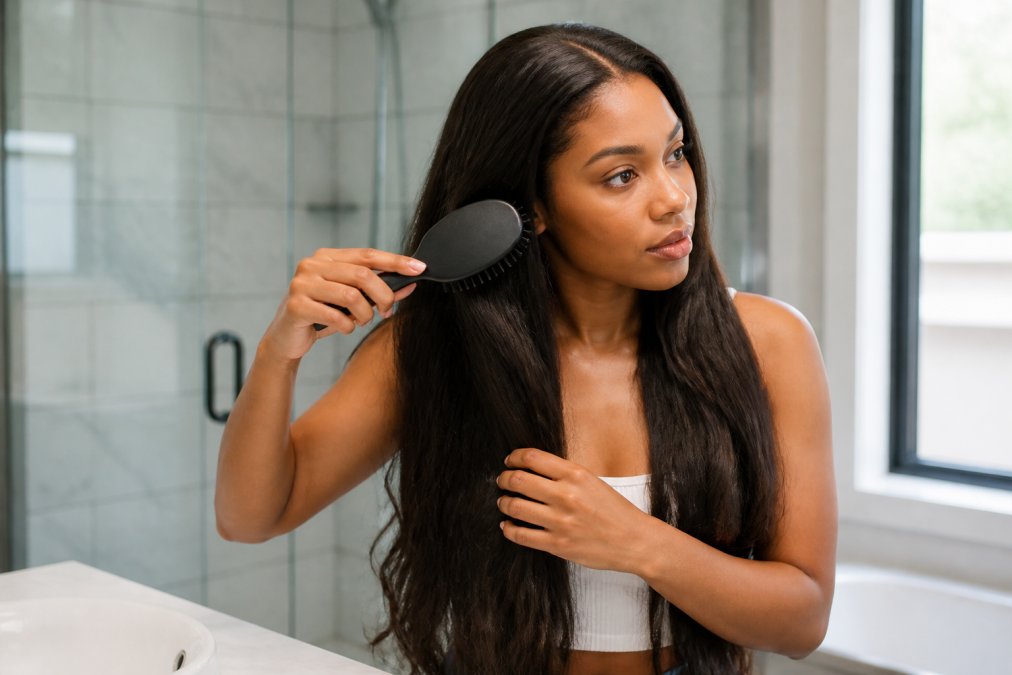
You stop hair extensions from shedding by treating them like delicate fabric, not like your natural hair. That means brushing from the ends upward, washing gently at the root, and never tugging through a knot.
Brushing and Washing Without Pulling
A common mistake is brushing from the top down. That drags every knot straight into the bond, which is the fastest way to loosen strands and pull hair out at the root.
Try this routine instead:
- Detangle dry, from the ends up. Hold the mid-length and work a soft-bristle brush through the last few centimetres first, then move upward in sections.
- Wash at the root, not the length. Shampoo the scalp area gently with your fingertips, let the suds rinse down the length, and skip scrubbing the ends.
- Condition mid-length to ends only. Conditioner near the bonds weakens the attachment.
- Squeeze, don't rub. Blot with a microfibre towel and let the hair air-dry where possible.
- Never brush wet. Wet hair stretches and snaps far more easily than dry hair.
Done consistently, this routine alone prevents most of the shedding people blame on poor quality.
How Long Do High-Quality Hair Extensions Last?
High-quality hair extensions last 12 to 24 months when they're properly maintained, with individual bond methods often needing reapplication every 4 to 5 months. Lifespan depends far more on aftercare than on the initial price tag.
The distinction matters: the hair itself can last well over a year, but the attachment point wears out faster. Keratin bonds, for example, are typically refitted every 4 to 5 months even though the hair is still in excellent condition. Tape methods can be reused for multiple applications before the adhesive weakens. So when people ask how long extensions last, they're really asking two questions: how long the hair survives, and how long the bond holds. Cheap, coated hair fails on the first question. Poor maintenance fails on the second.
Hair Extension Maintenance Tips for Thickness and Longevity
The maintenance habits that preserve thickness are boring, consistent, and non-negotiable. Skip them and no amount of premium hair will save you.
- Wash less often. Two to three times a week is plenty for most people; daily washing strips oils and loosens bonds.
- Use sulphate-free shampoo. Sulphates lift the cuticle and accelerate dryness.
- Deep condition weekly. A protein-free moisture mask mid-length to ends keeps strands supple.
- Book refits on schedule. Don't stretch a refit past its window; loose bonds pull on the surrounding hair.
- Rotate your parting. Wearing the same parting daily stresses the same section of bonds.
- Air-dry when you can. Every skipped blow-dry is a small win for the hair shaft.
If you're coming from a cheaper set, expect the first month with proper hair to feel different. Less tangling, less shedding, and no matting after washing are the signals that the cuticle is actually intact.
Which Extension Methods Thin Out Fastest
Methods that rely on glue, heavy heat, or bulky attachment points thin out fastest, because they concentrate stress on a small area of natural hair. Nano rings, keratin bonds, tape, and flat wefts distribute weight more evenly.
| Method | Bond Type | Typical Refit Window | Best For |
|---|---|---|---|
| Nano ring | Micro-ring, no glue | 4-5 months | Fine to medium hair |
| Keratin bond | Heat-fused strand | 4-5 months | Longest-lasting hold |
| Tape | Adhesive panel | 6-8 weeks | Fast application |
| Flat weft | Sewn or beaded row | 6-8 weeks | Thick, full volume |
The pattern is clear: the smaller and more evenly distributed the attachment, the less traction on your natural hair.

When Thinning Means It's Time to Replace Your Set
Replace your set when the hair thins evenly across the length rather than at the bonds, or when strands tangle within minutes of brushing despite proper aftercare. Those are signs the cuticle is gone and no treatment will bring it back.
Refit versus replace is the decision most people get wrong. If the hair still feels smooth and only the bonds are loose, that's a refit. If the hair itself is dry, rough, and tangling at the mid-lengths, the cuticle has failed and it's time to replace. Wearing a dead set too long also stresses your natural hair, because you're brushing through tangles more often and pulling harder.
For anyone weighing up a new set, our NANOBOND - 50g is built for fine to medium hair with the smallest, most discreet bond available, while the KERATIN BOND - 50g is the gold standard for anyone who wants the longest wear between appointments. Both are 100% single-donor virgin hair with intact cuticles, so there's no silicone coating to strip away and no surprise matting in month two.

Frequently Asked Questions
Why do my hair extensions look thin at the ends?
Thin ends usually come from cuticle damage, heat styling or dry brushing that snaps individual strands over time. Extensions with a silicone coating hide damage at first, then shed once the coating washes off. Single-donor, cuticle-intact hair such as QUEEN OF GOOD HAIR's virgin extensions keeps its thickness for 12-24 months because the cuticles stay aligned and don't catch on each other.
Is it normal for hair extensions to shed?
Losing a few strands when you brush or wash is normal, especially in the first week after fitting. Constant shedding, matting or visible thinning at the bonds is not. If you're finding clumps on your brush or pillow, check your aftercare routine and the quality of the hair. Poorly aligned cuticles and silicone-coated hair are the most common culprits behind excessive shedding.
How often should hair extensions be replaced to maintain thickness?
With proper care, high-quality virgin hair extensions last 12-24 months, though bonds and tapes need refitting every 4-8 weeks depending on the method. Keratin bond extensions typically need reapplication every 4-5 months, while tape extensions can be reused for up to 8-12 applications. Replace the hair itself when it starts looking thin at the ends, matting, or losing its natural movement despite good maintenance.
Can poor maintenance cause hair extensions to thin?
Yes. Brushing from the roots, sleeping with wet extensions, using sulphate-heavy shampoo and skipping heat protection all accelerate thinning. Sulphates and alcohol-based products strip moisture and break down bonds. Always brush from the ends upward, use a loop brush or soft bristle brush, tie hair in a loose plait before bed, and follow a hair extension maintenance routine that includes sulphate-free washing and regular deep conditioning.
Thinning extensions are almost always a maintenance and quality problem you can see coming. If you're tired of sets that tangle within weeks, QUEEN OF GOOD HAIR offers 100% single-donor virgin hair with full traceability from donor to delivery, a 12 to 24 month lifespan, and no silicone coating to mask damage. Shop the full range and get a set that holds its thickness from the first wash to the last.