

NanoBond Extensions Pool Care: How to Protect Them
Last Updated: November 15, 2026
Quick Summary
Swimming in a nanobond extensions pool is safe if you prepare well and rinse promptly afterwards. Chlorine dries the hair but will not ruin NanoBond extensions when you rinse with clean water before swimming and wash them within 30 minutes of leaving the pool.
- Rinse your hair with clean, tepid water before entering the pool to reduce chlorine absorption.
- Wash the lengths within 30 minutes of leaving the pool, using a gentle, sulphate-free shampoo.
- Keep conditioner and heavy products away from the NanoBond attachment points.
- Pat the hair dry and dry the bond area fully before tying it back or sleeping.
- Check the bonds weekly and book a professional bond check if you swim regularly.
Table of Contents
- How Chlorine and Saltwater Affect Extension Hair
- Preparing Your NanoBond Extensions Before a Swim
- Washing Hair Extensions After Swimming
- NanoBond Aftercare: Drying, Detangling and Bond Checks
- What to Do If Bonds Feel Slippery, Loose or Tangled
- Book a Bond Check Before Your Next Holiday
- Frequently Asked Questions
Swimming with hair extensions is possible, but pool water can shorten their life if you do not take care of them, so a nanobond extensions pool visit needs a little planning. A common question is whether chlorine will ruin NanoBond extensions. The short answer is no, not if you prepare properly and rinse them straight after each swim.
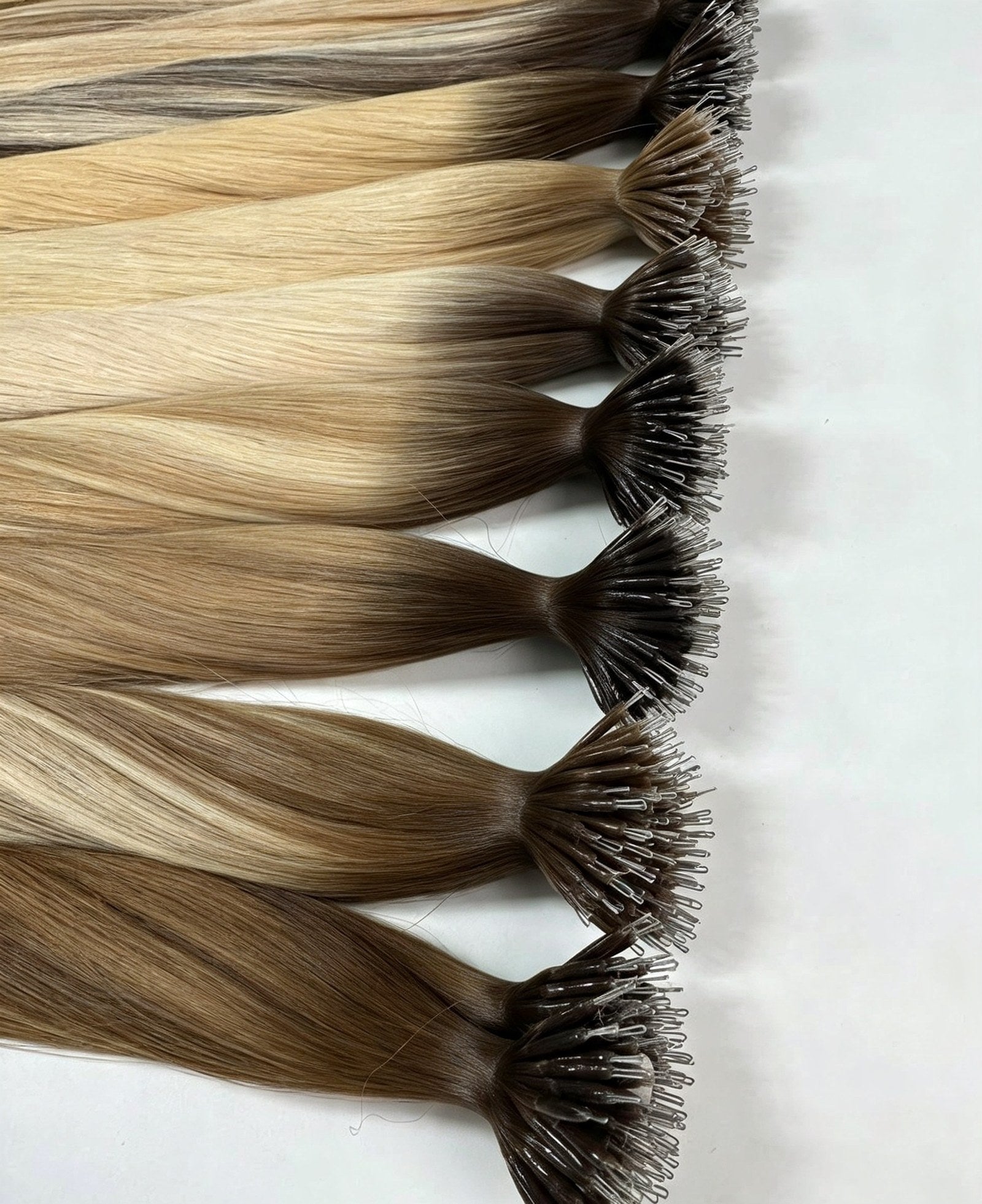
Pool water is not kind to hair. Chlorine can dry out the hair fibres and leave them feeling rough, which is why a simple routine matters so much. NANOBOND - 50g extensions are made from 100% single-donor virgin hair, cuticle intact, and have a 12-24 month lifespan.
The most important thing to know is this: swimming is fine, but how you prepare and care for your extensions makes the real difference.
How Chlorine and Saltwater Affect Extension Hair
Chlorine is the main concern in most pools. It is a strong chemical that strips natural oils from hair. Once those oils are gone, the hair can feel dry, tangled and dull, which is why a nanobond extensions pool routine should always include a proper rinse.
Saltwater behaves differently. It does not usually cause the same chemical build-up, but it can leave a salty residue that dries out the lengths. Sea water and sun together can be harsh on any hair, so rinse thoroughly after a day at the coast.
Here is what to watch for:
- Dryness: The lengths feel rough or straw-like after a swim.
- Tangling: Hair mats more easily when it is dry and stripped of oil.
- Dull colour: Chlorine can brighten or dull the tone over time.
- Stiffness: Residue can make the hair feel heavy and hard to style.
Knowing these signs helps you act early, before small issues turn into bigger problems.
Preparing Your NanoBond Extensions Before a Swim
Preparation is the easiest step to skip, and the one that helps most. A little care before you get in the water creates a barrier between your extensions and the chemicals.
Rinsing with clean water and pre-wetting
Before entering the pool, rinse your hair with clean, tepid water. This fills the hair with fresh water, so it absorbs less chlorine. Many swimmers find that wetting the hair first makes a noticeable difference.
- Rinse the lengths and the bonds thoroughly with clean water.
- Squeeze out the excess gently. Do not rub or twist.
- Do this every time, not just on the first swim of the holiday.
Using a leave-in conditioner or protective barrier near the bonds
A light leave-in conditioner works well on the lengths. Keep it away from the NanoBond attachment points, since product near the bonds can affect how they hold. Apply it only to the mid-lengths and ends, then smooth it through with your fingers.
Tie or braid your hair loosely so the lengths are not left floating in the water. This reduces tangling and stops the hair rubbing against itself.
Washing Hair Extensions After Swimming
Rinse as soon as you leave the pool. Do not wait until you are back at the hotel or home later in the day, because chlorine keeps working on the hair the longer it sits. Rinsing soon after leaving the water is the most useful step.
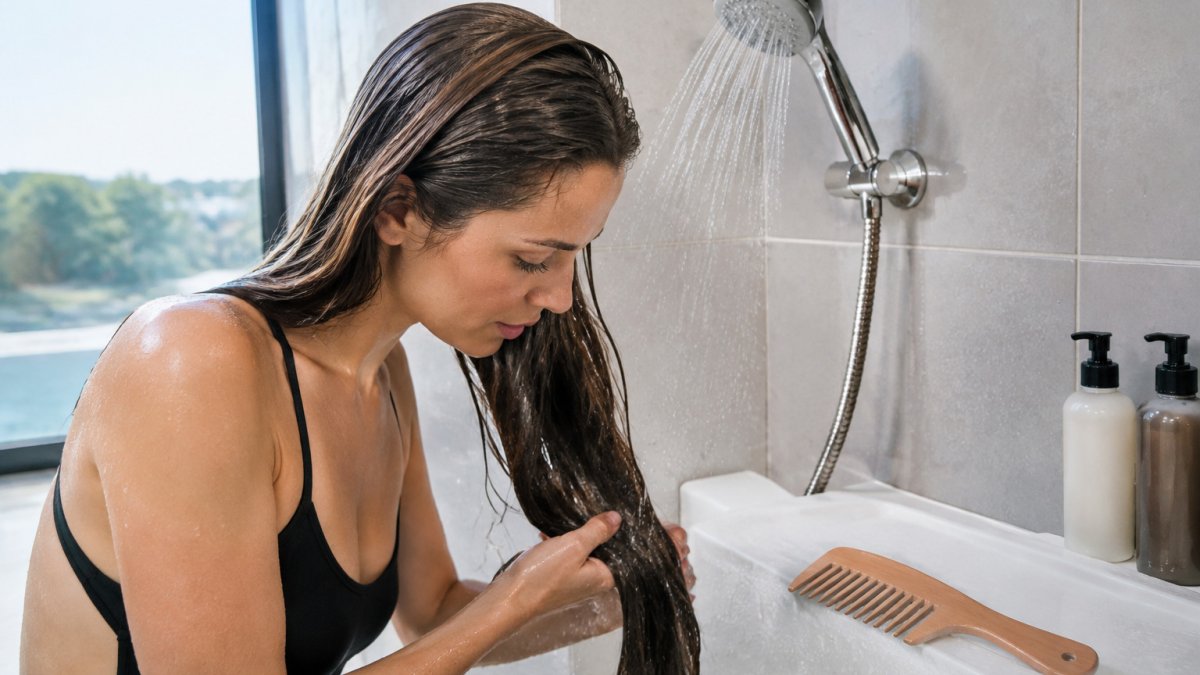
Use a gentle, sulphate-free shampoo and a conditioner. Work the product through the lengths rather than scrubbing the roots. Rinse with fresh water until it runs clear.
A timed post-swim wash routine
A simple schedule keeps the process consistent without over-washing:
- Within 10 minutes of leaving the pool: rinse the lengths and bonds with clean, tepid water until the water runs clear. This removes surface chlorine before it can settle.
- Within 30 minutes: wash with a sulphate-free shampoo, focusing on the mid-lengths and ends. Let the suds run down over the bond area rather than massaging shampoo directly into the bonds.
- Immediately after shampooing: apply conditioner from the mid-lengths to the ends. Keep it at least a few centimetres away from the NanoBond attachment points.
- Rinse until clear: use fresh water and check that no slippery residue remains near the bonds. Residue left at the attachment points is a common cause of slipping.
- Pat and air-dry: press the hair gently in a towel, then allow it to air-dry where possible before tying it back.
Washing hair extensions after swimming is one of the most useful habits you can build.
Product compatibility near the bonds
NanoBond attachments are sensitive to product build-up. Heavy oils, thick masks and silicone-heavy serums can build up around the bond area, so keep them off the attachment and apply lighter products to the mid-lengths and ends.
Watch out: if you apply conditioner directly to the bonds and do not rinse it fully, the attachment can loosen over time, so keep product on the lengths and rinse thoroughly.
Pool chemicals beyond chlorine
Chlorine is the main concern, but it is not the only one. Bromine, used in some pools and spas, behaves in a similar way to chlorine and can also dry the hair. Mineral treatments and salt-water systems can leave a residue that feels stiff once the hair dries. Rinsing after any pool or spa exposure is a sensible precaution, whatever the chemical. Where the effect of a specific pool chemical on extension hair is uncertain, the safest approach is to rinse promptly and monitor the lengths for dryness.
NanoBond Aftercare: Drying, Detangling and Bond Checks
Drying and detangling need as much care as washing. Pat the hair gently with a towel, then let it air-dry where possible. If you use heat, keep it on a low setting and use a heat protectant.
Drying at the roots and around the bonds
The attachment area is the part most often missed. Water trapped around a bond can keep it damp for some time, so drying the attachment area is important. After towel-drying, separate the hair gently around each bond and let air reach the roots. If you use a hairdryer, keep it on a low, cool setting and direct it at the roots and bond area until the attachment feels fully dry to the touch. Do not pull on the bond while drying.
A timed aftercare schedule
A consistent schedule makes aftercare easier to remember:
- Immediately after swimming: rinse, wash and pat dry as above.
- Within the first hour: detangle with a wide-tooth comb, starting at the ends and working up towards the roots. Never drag a brush through wet hair near the bonds.
- Before bed on a swim day: check that the bond area is fully dry, then tie the hair loosely or plait it to reduce friction overnight.
- Weekly: check each bond for looseness, tangling or dryness spreading towards the roots.
- Monthly: book a professional bond check if you swim regularly, so small issues are caught early.
Detangling near the bonds
Detangle with a wide-tooth comb, starting at the ends and working up towards the roots. Never drag a brush through wet hair near the bonds. If you meet resistance close to an attachment, stop and work the tangle out with your fingers rather than pulling.
Bond checks
Check the bonds regularly. Look for:
- Loose or slipping attachment points
- Any tangling near the bond area
- Dryness that spreads up towards the roots
NanoBond extensions are zero glue, zero heat and zero damage.
Pool exposure limits and frequency
Swimming frequency should be kept in mind, and prompt rinsing after each session helps keep the hair in good condition. If you swim several times a week, build in the timed routine above after every session and book a professional bond check more often. If you notice persistent slipping or dryness despite good aftercare, reduce pool frequency until a stylist has checked the bonds.
What to Do If Bonds Feel Slippery, Loose or Tangled
If a bond feels slippery or loose after swimming, do not pull or force it. Gently detangle the area with your fingers first, then check the lengths for residue.
A slippery feel often means product build-up or dryness near the attachment. Wash gently with a clarifying shampoo, rinse well, and dry the area properly before you wear the hair up or tie it back.
If a bond still feels loose, stop wearing that section and book an appointment with a qualified stylist. Attempting repairs at home can cause more damage.
Book a Bond Check Before Your Next Holiday
Planning a trip with a pool or the sea in mind? Book a bond check with a trained stylist before you travel. A quick check can catch small problems early, so you can enjoy your holiday without worry.
NanoBond extensions have a 12-24 month lifespan, and with a little planning they can stay in good condition. Find out more about the NANOBOND - 50g and how it is made, so you know exactly what you are caring for.
Frequently Asked Questions
Can you swim with NanoBond extensions?
Yes, you can swim with NanoBond extensions, but preparation matters. Wet the hair with clean fresh water before entering the pool so it absorbs less chlorinated water. Braid or tie the hair back loosely, apply a light leave-in conditioner to the lengths rather than the bonds, and rinse thoroughly straight after your swim. Limit how often you swim, as frequent exposure dries the hair and can make the bonds more prone to slipping over time.
Does chlorine damage NanoBond hair extensions?
Chlorine can dry out the hair fibres and leave them feeling rough and tangled, which is why regular exposure is the main concern. Rinsing with fresh water before and after swimming reduces the build-up of chemicals, and conditioning afterwards can help keep the hair manageable.
How do you wash NanoBond extensions after swimming?
Rinse the hair with lukewarm fresh water first to remove pool water. Then apply a sulphate-free shampoo to the lengths, working gently around the bonds rather than scrubbing them. Rinse, apply a conditioner to the mid-lengths and ends only, and pat the hair dry with a towel. Detangle gently with a wide-tooth comb, starting at the ends and working upwards, before drying fully.
Can pool water loosen NanoBond extensions?
Dryness, heavy conditioning near the roots and tugging while tangled can all cause slippage over time. Check the bonds after each swim, and if you notice any looseness, stop wearing the extensions until a stylist has inspected them rather than attempting to fix them yourself.
