

Flat Weft Extensions Lifespan: A Complete Guide
Table of Contents
- Understanding Flat Weft Extensions and Their Lifespan
- Flat Weft Extensions Maintenance: The Foundation of Longevity
- How to Wash Weft Hair Extensions Properly
- How Often to Move Up Weft Extensions
- Can You Reuse Weft Hair Extensions?
- Signs Your Flat Weft Extensions Need Replacing
- Maximising Your Investment in Quality Hair
- Frequently Asked Questions
Last Updated: October 13, 2026
Understanding Flat Weft Extensions and Their Lifespan
Understanding the flat weft extensions lifespan depends on how well you care for them. Most quality flat weft extensions last between 12 and 24 months with proper maintenance. Some last even longer if you're gentle with them and follow a solid care routine.

At QUEEN OF GOOD HAIR, we understand what these extensions need. Flat weft extensions sit closer to your scalp than other methods, which means they blend seamlessly but also need consistent attention.
The real difference between extensions that last a few months and those that last two years comes down to three things: how you wash them, how often you reposition them, and whether you're using quality hair to begin with. Single-donor virgin hair with intact cuticles resists tangling and matting far better than mixed-donor or chemically processed alternatives.
Flat Weft Extensions Maintenance: The Foundation of Longevity
Maintenance is everything when it comes to extending the life of your flat weft extensions. Think of it like maintaining a car, regular, gentle care prevents major problems down the road.
The most common mistake is treating extensions the same way you treat your natural hair. Extensions need a different approach:
- Use sulphate-free shampoo and conditioner (sulphates strip moisture and weaken the hair)
- Avoid high heat when possible, or use heat protectant spray if you style with tools
- Never sleep with wet extensions, this causes matting and weakens the bonds
- Keep your scalp clean to prevent buildup around the weft
- Brush gently, starting from the ends and working upward
Your extensions will thank you for consistency. A simple routine done well beats an expensive product used haphazardly every few weeks.
How to Wash Weft Hair Extensions Properly
Washing flat weft extensions correctly is the single biggest factor in how long they last. Improper washing causes tangling, matting, and weakening of the hair structure. Proper technique keeps the cuticles aligned and the hair smooth.
Step-by-Step Washing Process
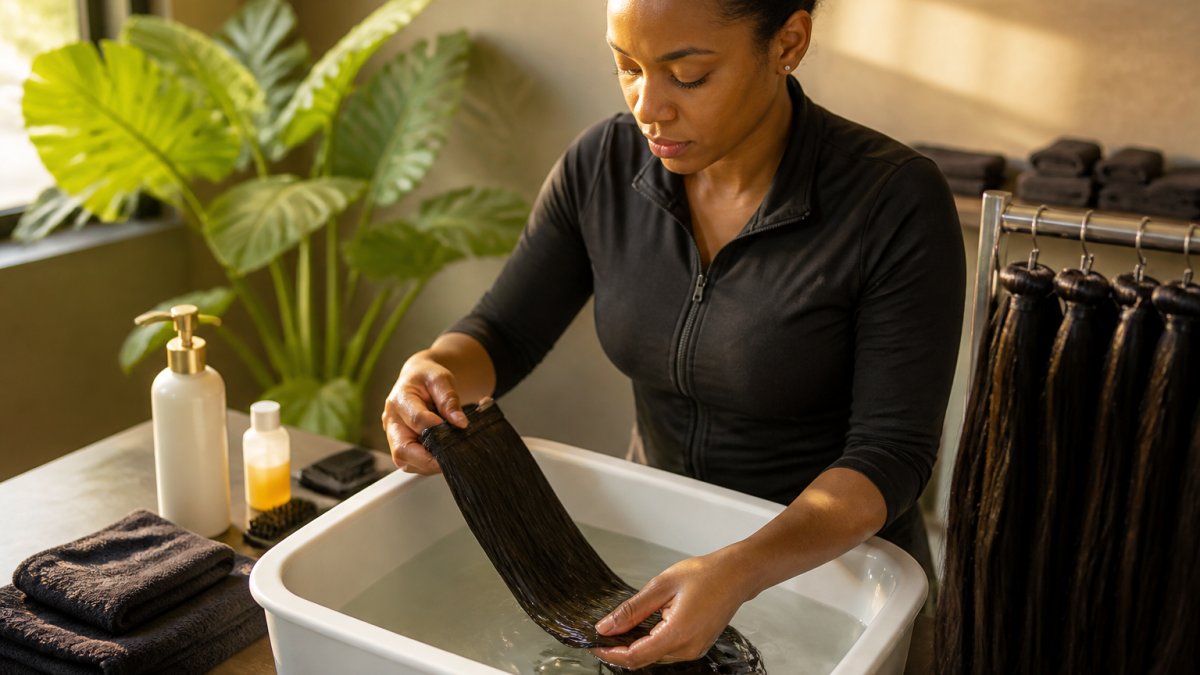
Start by filling a basin with lukewarm water. Hot water opens the hair cuticles and can cause damage; cold water doesn't clean as effectively. Lukewarm is the sweet spot.
Add a small amount of sulfate-free shampoo to the water. You don't need much, extensions don't accumulate the same buildup as natural hair on your scalp. Stir gently to mix.
Place your extensions in the water and let them soak for 2-3 minutes. This allows the shampoo to work without you having to scrub. Scrubbing creates friction and tangles.
Gently squeeze the soapy water through the hair from root to tip. Never rub, twist, or agitate the extensions. Think of it as supporting the hair, not cleaning it aggressively.
Drain the basin and rinse with fresh lukewarm water. You may need two or three rinses to remove all the shampoo. Rinse from root to tip, supporting the hair as you go.
Fill the basin again with clean water and add conditioner. Let the extensions soak for 3-5 minutes. Conditioner is crucial, it seals the cuticles and restores moisture that washing removes.
Gently squeeze the conditioner through the hair. Avoid the weft area itself; focus on the hair strands. Rinse thoroughly with lukewarm water until the water runs clear.
Drying and Styling After Washing
Never wring or twist wet extensions. This breaks the hair and causes matting. Instead, gently squeeze excess water out using your hands.
Wrap the extensions in a soft microfibre towel or clean t-shirt. Let them air dry for at least 30 minutes before styling. Patience here saves you weeks of lifespan later.
If you need to use heat to dry them, use a blow dryer on low speed and low heat. Keep the dryer moving and never concentrate heat in one spot. Apply heat protectant spray before using any heat tool.
Once dry, brush gently from the ends upward. Start at the very bottom and work your way up in small sections. This prevents tugging and tangling.
How Often to Move Up Weft Extensions
Moving up your weft extensions is a maintenance step that keeps them looking natural and prevents damage to your own hair. As your natural hair grows, the weft moves down your head. This creates tension and can cause breakage.
Most people need to move up their extensions every 6-8 weeks if they wear them daily. If you wear them part-time or have slower hair growth, you might go 8-10 weeks between appointments.
The key is not to wait too long. When the weft sits too low, it creates constant pulling on your natural hair underneath. This weakens your roots and can cause permanent damage.
A professional stylist can move up your extensions safely. This is different from replacing the extensions, you're keeping the same hair and simply moving it up.
Regular repositioning actually extends the flat weft extensions lifespan because it prevents the stress that comes from a weft sitting too low.
Can You Reuse Weft Hair Extensions?
Yes, you can reuse flat weft extensions if they're still in good condition. Quality hair like single-donor virgin hair can be reused multiple times if you maintain it properly.
When you move up your extensions, the stylist removes the old weft bonds and can install new bonds on the same hair. This is cost-effective and environmentally responsible. The hair itself isn't damaged by this process, only the bonds are replaced.
However, not all extensions can be reused. If the hair is matted, tangled, or showing signs of damage, reusing it won't work. Damaged hair doesn't hold new bonds as well and won't blend with your natural hair.
The difference comes down to quality and care. Single-donor hair with aligned cuticles can often be reused 2-3 times. Mixed-donor or lower-quality hair typically can't be reused because it tangles too easily.
When you're considering whether to reuse your extensions, ask yourself: would I be happy wearing this hair again? If the answer is yes, reuse it. If the hair looks tired or damaged, it's time for fresh extensions.
Signs Your Flat Weft Extensions Need Replacing
Knowing when to replace your extensions prevents damage to your natural hair and keeps you looking polished. Here are the clear signs it's time for new ones:
Matting and tangling that won't come out. If you've tried gentle brushing and conditioning treatments but the hair still tangles, the cuticles are damaged. New extensions are the answer.
Visible thinning or breakage. Run your fingers through the extensions. If you see short hairs breaking off or notice the weft looks thinner than it used to, the hair is weakening.
Dullness and loss of shine. Healthy hair has natural shine. If your extensions look dull and lifeless even after conditioning, the cuticle layer is compromised.
Difficulty blending with your natural hair. Extensions should move and blend seamlessly with your own hair. If they look obviously different or don't move naturally, it's time to replace them.
Weft damage or visible wear. Inspect the weft itself. If it's cracked, loose, or visibly worn, the bonds won't hold new hair as well.
You've reached the 24-month mark. Even if your extensions still look okay, two years is a natural endpoint for most flat weft extensions. The hair has been through a lot by then.
Maximising Your Investment in Quality Hair
Your investment in quality flat weft extensions pays off when you treat them as a long-term commitment. Here's how to get the most from them.
Start with the right foundation. Single-donor virgin hair resists tangling and lasts longer than alternatives. QUEEN OF GOOD HAIR's flat weft extensions are designed to last 12-24 months because they're 100% single-donor hair with cuticles intact. This quality matters from day one.
Establish a washing routine and stick to it. Washing every 2-3 weeks (depending on how much you wear your extensions) keeps them clean without over-washing. Mark it on your calendar if that helps.
Invest in the right products. Sulphate-free shampoo and conditioner cost a bit more but make a massive difference in longevity. These products are worth the expense.
Schedule regular repositioning appointments. Moving up your extensions every 6-8 weeks keeps them comfortable and prevents damage to your natural hair. This is not optional if you want them to last.
Be honest about when it's time to replace them. Trying to stretch extensions past their lifespan leads to breakage and damage to your own hair. It's better to start fresh with new extensions than to damage your natural hair trying to save money.
Understanding the lifespan of flat weft extensions means recognising that quality hair and consistent care go hand in hand. Your extensions are only as good as the maintenance you put in. Start with premium, ethically sourced virgin hair that's built to last, then commit to a simple care routine that keeps them in top condition. The result is extensions that look beautiful and last through multiple seasons, giving you the natural volume and transformation you want without the constant worry of damage or replacement.
Frequently Asked Questions
How long do flat weft extensions actually last with proper care?
Quality flat weft extensions typically last between 12 and 24 months with consistent maintenance. The lifespan depends heavily on how often you wear them, your washing routine, and how well you maintain them between salon visits. Extensions worn daily and washed regularly will have a shorter lifespan than those worn occasionally. Single-donor virgin hair with intact cuticles, like QUEEN OF GOOD HAIR's Flat Weft extensions, resists tangling and matting, which directly extends their usable life compared to lower-grade alternatives.
What's the difference between moving up extensions and replacing them entirely?
Moving up (or repositioning) your extensions involves shifting them higher on the scalp as your natural hair grows, typically every 4 to 8 weeks. This process reuses the same weft extensions. Replacing them means removing the old extensions entirely and applying a new set. The wefts themselves can usually be reused if they remain intact and undamaged during removal.
Can flat weft extensions be reused after removal?
Yes, flat weft extensions can be reused if they're removed carefully by a professional and remain in good condition. If you're planning to reuse extensions, professional removal protects the weft integrity. However, the hair itself may show wear depending on how intensively you've styled and washed it. Reusing extensions is cost-effective but only works if the original extensions were high-quality to begin with.
What washing mistakes shorten the lifespan of flat weft extensions?
The most common mistakes are using hot water (which weakens the hair and weft), washing too frequently without proper conditioning, and rough handling while wet. Brushing extensions while wet causes breakage and weft stress. Using regular shampoo designed for natural hair strips moisture and causes tangling. Always use lukewarm water, gentle motions, and extension-specific products to preserve both the hair and weft structure.