

Avoiding Plastic Shine in Extensions: A Practical Guide
Table of Contents
- Why Your Extensions Look Plastic (And What Causes It)
- How to Make Synthetic Hair Look Real
- Removing Shine From Hair Extensions With Dry Shampoo
- How to Wash Hair Extensions Properly
- How to Fix Plastic Shine in Extensions: Step-by-Step
- Choosing Extensions That Don't Shine Like Plastic
- Common Mistakes to Avoid
- Frequently Asked Questions
Last Updated: October 2, 2026
Why Your Extensions Look Plastic (And What Causes It)
Plastic shine in extensions is an unnatural, reflective gloss caused by silicone coatings, low-quality fibre, or too much heat. The hair catches light in one flat sheet instead of scattering it softly like natural hair.
Most extensions look fake for one reason: the coating. Cheap bundles get dipped in silicone to hide damaged cuticles. That coating feels smooth for a week. Then it dries out, flakes, and leaves the fibre looking dull and waxy.
Real hair reflects light unevenly because every strand has a slightly different texture. Silicone forces every strand to reflect the same way. The result is that tell-tale plastic shine.
Here's what most guides get wrong: they blame the hair type. The real culprit is usually the finish, not the fibre itself. Fix the coating and the shine goes with it.
This guide breaks down exactly how to kill that shine, wash extensions properly, and choose hair that never looks fake in the first place.
How to Make Synthetic Hair Look Real
The fastest way to make synthetic hair look real is to break the uniform surface with powder, heat, or texture. Synthetic fibre shines because every strand is identical. Real hair is not.
Start with these steps:
- Dust dry shampoo or translucent powder through the mid-lengths
- Use low heat to soften the fibre slightly, never high heat
- Add a loose wave with a wide barrel to break the flat surface
- Tease the roots a little for volume and realism
- Avoid brushing too much, which re-flattens the shine
Powder is your best tool here. It scatters light instead of reflecting it. A light dusting takes synthetic hair from costume-shop to believable in under a minute.
The trick is restraint. Too much powder looks dusty. Build it in thin layers until the shine softens.
Heat Control and Fibre-Safe Styling
Synthetic fibre melts. Most synthetic hair cannot take direct heat above a low setting, and some cannot take heat at all. Check the label before you touch it with a tool.
For heat-friendly synthetic fibre, keep your iron or wand on the lowest setting. Test on a hidden strand first. If it crinkles or sticks, stop.
For human hair extensions, heat is safer but still a risk. High heat strips moisture and burns the cuticle, which creates shine and dullness at the same time. A common mistake is styling damp hair with a hot tool. That boils the water inside the strand and damages it fast.
Keep tools moving. Never hold heat in one spot. Always use a heat protectant made for extensions.
Removing Shine From Hair Extensions With Dry Shampoo
Dry shampoo is the single best fix for removing shine from hair extensions with dry shampoo in a hurry. It adds texture and cuts the reflective surface without water.
Here is how to do it right:
- Section the hair and clip the top layers up
- Hold the can 20-25cm from the mid-lengths and ends
- Spray in short bursts, not one long blast
- Wait 30 seconds for the powder to settle
- Work it through with your fingers, not a brush
- Add a second light layer only if shine remains
Focus on the mid-lengths and ends. The roots need less. Spraying too close leaves white patches that are hard to blend out.
Pick a dry shampoo with little to no silicone. Silicone-based sprays add the exact shine you are trying to remove. A simple powder formula works better.
If you are between washes, dry shampoo also absorbs oil at the roots. That oil is another shine source, so you fix two problems at once.
How to Wash Hair Extensions Properly
Washing extensions properly means using cool water, sulphate-free shampoo, and a downward motion. Hot water and rough scrubbing strip the cuticle and cause the shine and matting that follow.
Follow this method:
- Brush the extensions fully before washing
- Use cool or lukewarm water only
- Apply sulphate-free shampoo to the roots, not the ends
- Let shampoo run down the length as you rinse
- Apply conditioner to the mid-lengths and ends only
- Never scrub or bunch the hair
- Rinse until the water runs clear
Wash extensions less often than your natural hair. Once a week is plenty for most people. Overwashing strips the natural oils that keep the fibre looking soft.
A common mistake is piling extensions on top of your head like natural hair. That tangles the cuticles and creates matting. Keep the hair hanging straight down as you wash.
For anyone wondering how to wash hair extensions properly without losing softness, the answer is gentle motion and cool water. That is it.
Drying and Finishing Without Adding Shine
Drying matters as much as washing. Rough towel drying creates friction and frizz. That frizz scatters light badly and can look dull rather than shiny.
Blot the hair with a soft microfibre towel. Never rub. Then let it air dry when you can.
If you use a hairdryer, keep it on a low heat setting and point the airflow down the length. Finish with a light mist of texture spray, not a shine serum. Shine serums are the enemy here.
A small amount of light hold spray adds grip and cuts reflection. Skip heavy oils and gloss drops entirely.
How to Fix Plastic Shine in Extensions: Step-by-Step
You can fix plastic shine in extensions in about ten minutes with powder, low heat, and a little texture. The goal is to break the flat, uniform surface.
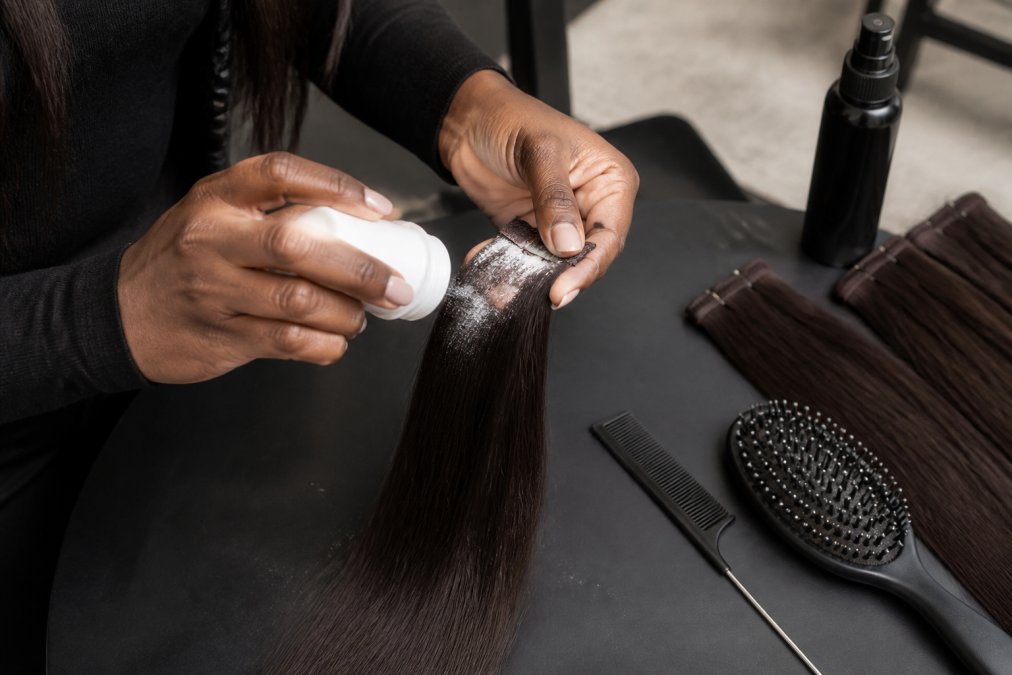
Here is the full routine:
- Brush out all tangles so the hair sits straight
- Dust dry shampoo through the mid-lengths and ends
- Work it in with your fingers until the shine softens
- Add a loose wave with a wide barrel on low heat
- Tease the roots lightly for volume
- Finish with texture spray, not serum
- Check under bright light and repeat if needed
The wave step is what makes it work. A flat surface reflects light in one direction. A loose wave breaks that reflection into soft highlights that read as natural.
If the extensions are still shiny after this, the coating is the problem. Silicone-coated hair will keep shining no matter what you do. That is a sign to replace the set, not fight it.
Choosing Extensions That Don't Shine Like Plastic
The best way to avoid plastic shine is to buy extensions that never had a silicone coating in the first place. Prevention beats every fix.
Look for these markers:
| Feature | What It Means | Why It Matters |
|---|---|---|
| Single-donor hair | All strands from one head | Even texture, natural light scatter |
| Aligned cuticles | Cuticles run the same way | Less tangling, softer finish |
| No silicone coating | No fake gloss layer | Shine looks natural, not plastic |
| Virgin, unprocessed hair | Not chemically stripped | Keeps natural texture and oils |
Cuticle alignment is the detail most buyers miss.
Common Mistakes to Avoid
The same errors cause plastic shine again and again. Avoid these and your extensions will look better for longer.
- Using shine serum on extensions. It adds the exact gloss you want to remove.
- Washing with hot water. Heat strips the cuticle and dulls the fibre.
- Brushing wet extensions. This stretches and snaps the strands.
- Overheating with styling tools. Burns create permanent dull patches.
- Buying silicone-coated hair. The shine returns the moment the coating wears off.
- Overwashing. Strips natural oils and speeds up damage.
- Skipping heat protectant. A small step that prevents long-term harm.
Frequently Asked Questions
Why do some hair extensions look like plastic?
Plastic shine usually comes from silicone coatings applied during manufacturing to make hair look smooth on the shelf. These coatings sit on top of the cuticle and reflect light in a uniform, artificial way. Low-quality hair with misaligned cuticles also reflects light unevenly, which reads as synthetic. Genuine single-donor hair with aligned cuticles reflects light the way natural hair does, so the finish looks softer and more believable.
Does dry shampoo help remove shine from hair extensions?
Yes. A light dusting of dry shampoo adds texture and diffuses light across the surface of the hair, which reduces that reflective sheen. Spray or puff it along the mid-lengths and ends, then work it through with your fingers or a wide-tooth comb. Focus on the areas that catch light most, such as the crown and the front face-framing sections. Avoid over-applying, as buildup can dull the hair unevenly.
Can you use baby powder to dull shiny hair extensions?
Baby powder works as a short-term fix because the fine powder scatters light, similar to dry shampoo. Sprinkle a small amount onto your hands, then run them through the mid-lengths and ends. The effect fades once the powder settles or is brushed out, so it is best for quick touch-ups rather than a long-term solution. For a cleaner finish, use a dedicated dry shampoo formulated for hair extensions.
Is it possible to permanently remove plastic shine from extensions?
You cannot permanently strip shine from hair that was coated in silicone during manufacturing, because the coating sits on the surface and will return as the hair is handled. What you can do is manage it: wash with a sulphate-free shampoo, use dry shampoo for texture, and avoid heavy silicone serums that add more reflection. Choosing extensions with no silicone coating from the start is the only way to avoid the problem entirely.
Plastic shine is fixable, but the easiest fix is choosing hair that never had it. If you are tired of fighting coatings and dull finishes, QUEEN OF GOOD HAIR offers 100% single-donor virgin hair with aligned cuticles, no silicone coating, and a 12 to 24 month lifespan. You get a natural finish, full traceability, and hair that holds up to daily wear. Browse the full range and find extensions that look real from the first wear. Shop All.