

Are Single Donor Extensions Worth It? UK Review 2026
Table of Contents
- What Single Donor Extensions Actually Are (And Why the Label Matters)
- Single Donor vs Multi Donor Hair Extensions: The Real Differences
- How to Identify High Quality Raw Hair Before You Buy
- Are Single Donor Extensions Worth It? Pros, Cons and Cost Breakdown
- The Best Hair Care Routine for Raw Hair Extensions
- Which Application Method Suits Your Hair Type
- Frequently Asked Questions
Last Updated: September 18, 2026
What Single Donor Extensions Actually Are (And Why the Label Matters)
Single donor extensions are hair extensions made from the hair of one person, cut and kept together from ponytail to bundle, rather than blended from several donors. That single origin is what allows the cuticles to stay aligned in one direction. When cuticles run the same way, the strands glide past each other instead of catching and locking.
The label matters because it is often used loosely. Many bundles sold as "single donor" are actually mixed-donor hair that has been acid-treated and silicone-coated to look smooth on day one. That coating washes off, and the cuticles underneath are already roughened. This is the root of the matting complaint so many buyers report within weeks.
At QUEEN OF GOOD HAIR, every bundle is 100% single-donor virgin hair with intact cuticles and no silicone coating. Traceability runs from donor to delivery, which is the only way to genuinely verify the claim.
Single Donor vs Multi Donor Hair Extensions: The Real Differences
Mixed-donor hair combines strands from multiple people. Different donors mean different cuticle directions, so the hair is usually stripped and coated to make it behave. It feels soft in the packet and roughens after a few washes.
Single donor hair keeps one cuticle direction throughout. It costs more because a single ponytail yields a limited amount of usable length, and no processing is used to stretch that supply.
| Feature | Single Donor | Multi Donor |
|---|---|---|
| Cuticle direction | Aligned, one direction | Mixed, often stripped |
| Coating | None | Often silicone-coated |
| Typical feel over time | Stays smooth | Roughens after washes |
| Tangling risk | Low | Higher |
| Colouring | Possible | Risky, often uneven |
| Lifespan | 12-24+ months | Weeks to a few months |
The lifespan gap is the practical difference. A bundle that lasts a year or more and can be reused across several fittings works out cheaper per wear than a cheap set replaced every few weeks. That calculation is the heart of whether single donor extensions are worth it.
How to Identify High Quality Raw Hair Before You Buy
Raw hair is unprocessed hair that has not been chemically stripped, dyed, or coated. The challenge is that coated hair mimics raw hair in the packet, so you need tests that reveal what happens after washing.
Try these checks before committing:
- The water test. Wet a small section. Coated hair feels slick and plasticky; genuine raw hair absorbs water and feels like your own wet hair.
- The burn test. A single strand should smell like burnt hair and turn to ash. Synthetic blends melt into a hard bead.
- The cuticle check. Run a strand between finger and thumb from root to tip, then tip to root. Aligned cuticles feel smooth one way and slightly rougher the other.
- The shed test. Comb a damp section. Heavy shedding points to short, weak strands.
- Ask for traceability. A supplier who cannot tell you where the hair came from cannot back the single-donor claim.
UK trading standards guidance on misleading product claims is worth reading if you want to understand what a seller is legally allowed to claim about origin.
Are Single Donor Extensions Worth It? Pros, Cons and Cost Breakdown
For most people who wear extensions regularly, single donor extensions are worth it. The higher upfront cost is offset by a longer lifespan and the ability to reuse the hair across multiple fittings.
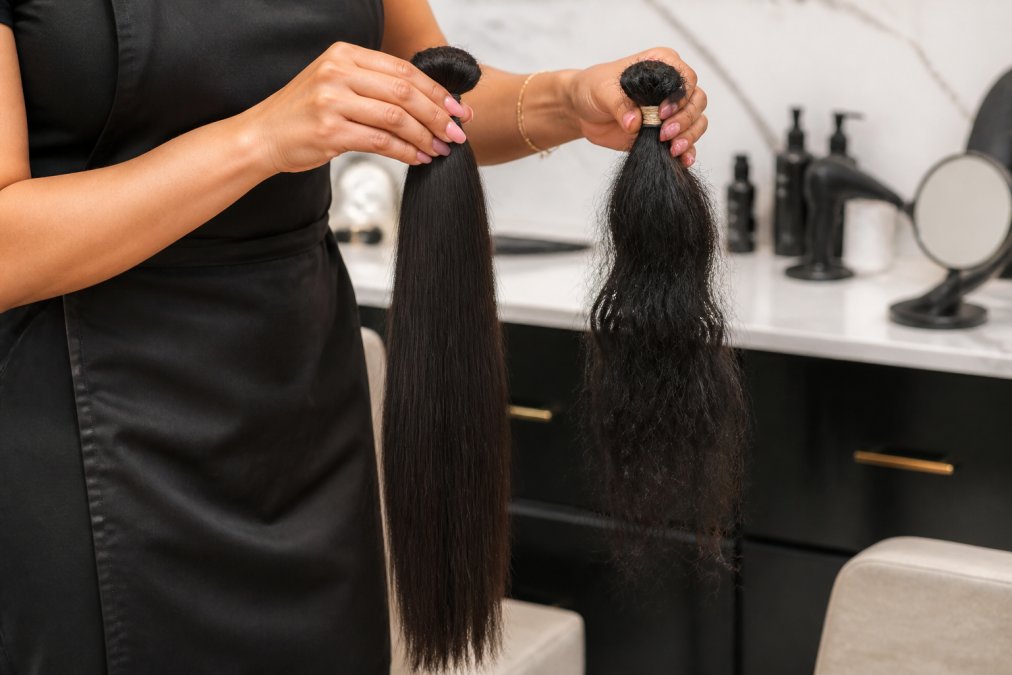
The pros:
- Lifespan of 12-24+ months, versus weeks or a few months for coated hair
- No tangling or matting when cared for properly
- Can be coloured and heat-styled
- Seamless, natural-looking blend
The cons:
- Higher upfront cost
- Limited supply, so matching a specific shade takes planning
- Requires proper aftercare to hit the full lifespan
On cost, a 50g bundle from QUEEN OF GOOD HAIR starts at £127. Spread across a year or more of wear, that is a fraction of the cost of replacing cheap sets every few weeks. The maths favours single donor once you factor in reusability.
The Best Hair Care Routine for Raw Hair Extensions
The best hair care routine for raw hair extensions is simple: wash less often, use sulphate-free products, and always work downward from root to tip. Raw hair behaves like your own hair, so treat it that way.
A workable weekly routine:
- Brush before washing. Use a loop brush from ends to roots to remove tangles dry.
- Wash with sulphate-free shampoo. Lukewarm water, gentle motion, no scrubbing at the bonds.
- Condition mid-length to ends. Keep conditioner off the bonds to protect the attachment.
- Blot, don't rub. Wrap in a microfibre towel and let it air dry where possible.
- Heat-protect before styling. Keep tools below 180°C and never hold heat on one spot.
- Sleep with hair tied loosely. A silk pillowcase reduces friction overnight.
NHS guidance on caring for hair and scalp offers general advice on keeping hair and scalp healthy, which applies to the hair you are blending extensions into.
Which Application Method Suits Your Hair Type
The right method depends on your natural hair density and how you wear your hair day to day. Fine hair needs the most discreet bond; thicker hair can carry more weight.
- Fine to medium hair: NANOBOND uses the smallest, most discreet bond available, with zero glue and zero heat. It sits invisibly at the root. NANOBOND 50g
- Most hair types wanting longevity: KERATIN BOND fuses individual strands with a gentle heat wand and is the longest-lasting bond method, ideal for 4-5 months between appointments. KERATIN BOND 50g
- Speed and reusability: INVISI TAPE applies in under an hour and is reusable for up to 8-12 applications. INVISI TAPE 50g
- Maximum discretion with volume: FLAT WEFT sits closer to the scalp than any other weft method, with no bulk or bumps. FLAT WEFT 50g
Every option is 100% single-donor virgin hair with intact cuticles and a 12-24 month lifespan.

Frequently Asked Questions
What does single donor hair mean?
Single donor hair comes from one person's head, so every strand has the same texture, colour and cuticle direction. This matters because hair from multiple donors often has mismatched cuticles that rub against each other and cause tangling. With single donor hair, the cuticles stay aligned, which is why it resists matting and lasts longer. It also means the hair you receive is traceable back to its source, so you can verify the ethical claims rather than taking them on trust.
How can you tell if hair extensions are single donor?
Run your fingers through a wet bundle. Single donor hair with intact cuticles feels smooth in both directions and dries without matting at the ends. Multi donor hair often feels rougher going against the grain and tangles quickly when wet. You can also check the ends: single donor hair tapers naturally because it came from one head, while mixed bundles often have blunt or inconsistent ends. Ask for traceability documentation too, because genuine single donor suppliers can show where the hair came from.
How long do single donor hair extensions typically last?
With proper care, single donor extensions can last 12 to 24 months, depending on the application method and how you maintain them. Keratin bond extensions typically need reapplication every 4 to 5 months, while tape methods can be reused for up to 8 to 12 applications. The hair itself outlasts the bonds, which is why the upfront cost works out lower per month than replacing cheaper extensions every few months. Washing with sulphate-free products and avoiding heat damage extends the lifespan further.
Is single donor hair the same as virgin hair?
Not exactly. Virgin hair means the hair has never been chemically treated, coloured or processed. Single donor means it came from one person. The best extensions are both: single donor virgin hair, which means one person's untreated hair with all cuticles intact and aligned. Some suppliers sell virgin hair that has been collected from multiple donors, which still tangles because the cuticles clash. When you are buying, ask for both: single donor and virgin, not just one or the other.
Why are single donor extensions more expensive?
Single donor hair costs more because it takes longer to source, requires ethical payment to the donor, and produces less usable hair per collection. At QUEEN OF GOOD HAIR, 50g of single donor extensions starts at £127. Multi donor hair is cheaper to produce because suppliers can blend smaller amounts from many sources, but it tangles faster and needs replacing sooner. When you divide the cost by the months of wear, single donor often works out cheaper per month than replacing low-quality hair three or four times a year.
Choosing hair extensions is a long-term decision, and the wrong bundle costs you twice: once at purchase, and again when you replace it weeks later. QUEEN OF GOOD HAIR takes the guesswork out with 100% single-donor virgin hair, a full chain of traceability from donor to delivery, and no silicone coating, so what you feel in the packet is what you get after a year of wear. Get started with QUEEN OF GOOD HAIR and choose a set built to last.