

How to Spot Signs of Ethically Sourced Hair Products
Last Updated: November 17, 2026
Quick Summary
Ethically sourced hair is hair that can be traced back to a consenting donor who was paid fairly, collected under safe conditions, and processed without hidden chemical treatment. Because no official body approves the term on a label, you should ask suppliers for evidence such as traceability records, consent forms and named audits rather than trusting a sticker.
- Virgin hair describes processing only, so judge it separately from ethical sourcing.
- Ask which village a bundle came from and who the donor was.
- A genuine sourcing policy names collection methods, payment model, consent process and an independent audit.
- Single-donor hair shortens the trail and is easier to verify than mixed-donor bundles.
- Treat an audit that is in progress or planned as absent.
Table of Contents
- What Ethically Sourced Hair Actually Means
- Why Hair Extension Traceability Matters More Than a Label
- What a Genuine Ethical Hair Sourcing Policy Looks Like
- Questions to Ask Hair Extension Suppliers Before You Buy
- Why Single-Donor Hair Is a Hallmark of Ethical Sourcing
- A Practical Checklist for Verifying Ethical Claims
- Choosing Ethically Sourced Extensions for Your Salon
- Frequently Asked Questions
What Ethically Sourced Hair Actually Means
Ethically sourced hair is hair that can be traced back to a consenting donor who was paid fairly, collected under safe conditions, and processed without hidden chemical treatment. That is the whole definition. Everything else is marketing.
The phrase "ethically sourced" is often stretched until it means almost nothing. There is no single legal definition of the term, and no official body approves its use on a label, as Sedex's analysis of ethical sourcing claims points out. So a sticker proves nothing on its own.
What you can check is evidence. Ask where the hair came from, who gave it, and how it was collected. A supplier with real answers will not hesitate.
The Difference Between Virgin Hair and Ethical Sourcing
These two terms get used as if they mean the same thing. They do not.
Virgin hair describes processing. It means the hair has not been bleached, dyed or chemically stripped. Ethical sourcing describes the human chain behind it: consent, fair pay, safe working conditions and traceability.
You can buy virgin hair that was collected unethically. You can also find ethically collected hair that has been lightly processed. Judge both separately. A bundle that claims "virgin" tells you nothing about the donor. For a closer look at how these terms sit in the British market, our guide to ethical hair extensions breaks down the language suppliers use.
Why Hair Extension Traceability Matters More Than a Label
Traceability beats any badge. If a supplier cannot tell you which donor a bundle came from, or at least which collection batch, there is no way to confirm the hair was given freely or paid for fairly.
Consumer guidance on ethical hair sourcing flags three checks worth making: donor consent, a traceable supply chain and honest labelling. Notice that all three are about evidence, not slogans. A label saying 'ethical' is a claim. A traceability record is proof.
But what does a traceability record actually contain? At a minimum, it should link a specific bundle to a collection batch, and that batch should have a documented origin: a named collection point, a date, and a payment record. Some suppliers use batch codes that can be checked against a database; others provide a paper trail on request. The key is that the information is specific enough to be verified independently, not just a generic statement that 'all our hair is traceable'.
A common pattern among suppliers who genuinely trace their hair is that they can answer a question like 'Which village was this bundle collected from, and who was the donor?' without hesitation. Those who cannot often resort to phrases like 'our suppliers are vetted' or 'we work only with trusted partners'. Those phrases are not traceability; they are an appeal to trust.
This is where most buyers get caught out. They ask 'is this ethical?' and accept a yes. The better question is 'show me how you know.'
If you want a deeper method for cutting through claims, our guide on how to find truly ethical hair extensions walks through the questions that actually separate evidence from marketing.
Ask who issued any traceability document and what checks were performed.
What a Genuine Ethical Hair Sourcing Policy Looks Like
A real ethical hair sourcing policy is written down, specific and checkable. Vague statements about "responsible partners" do not count.
Look for these elements:
- Named collection methods and where they happen
- A stated payment model for donors, not just "fair compensation"
- Consent process described in plain terms
- Working conditions and health and safety commitments
- Traceability system linking each bundle to a batch or donor
- Independent audit or third-party review, named
What most guides miss is that a policy with no audit trail is just a promise. Promises are cheap.
Questions to Ask Hair Extension Suppliers Before You Buy
Ask direct questions and listen for specifics. A supplier with a real sourcing policy will answer in detail. One without will give you warm words.
Put these to any supplier:
- Where exactly was this hair collected?
- How do you confirm donor consent?
- How are donors paid, and at what rate?
- Can you trace this bundle to a single donor or batch?
- Who audits your supply chain, and when was the last audit?
- What labour standards apply at collection and processing?
- Can you show written evidence for any of the above?
The last question is the one that matters. Anyone can talk. Fewer can produce documents. For practical vetting advice, our supplier guide for reliable hair extension partners covers what to request and how to read it.
Why Single-Donor Hair Is a Hallmark of Ethical Sourcing
Single-donor hair comes from one person, which makes the trail far shorter and easier to verify. Mixed-donor hair blends many sources into one bundle, and that blending is exactly where traceability falls apart.
When a bundle has one donor, you can ask who that donor was, how they were paid and how the hair was collected. When a bundle has twenty donors, that question becomes almost impossible to answer honestly.
There is a quality benefit too. Single-donor hair with aligned cuticles resists tangling and matting, which is why it tends to last far longer. Our comparison of single-donor versus mixed-donor hair explains why the cuticle direction matters as much as the sourcing.
A Practical Checklist for Verifying Ethical Claims
Use this checklist before you commit to any order. For each line, ask for specific evidence rather than a verbal assurance. A 'yes' without documentation is just a claim.
- The supplier states the country and method of collection. Ask for the region and whether hair is collected via a temple, salon, or door-to-door network. Vague answers like 'sourced globally' are a red flag.
- Donor consent is described in writing. Request a sample consent form or a description of the consent process. Look for plain-language explanations of what donors are told and how they can withdraw.
- Payment to donors is explained, not just called 'fair'. Ask for the payment model: per bundle, per gram, or a fixed fee? Is payment made directly to the donor or via an intermediary? A supplier who cannot describe the mechanism is unlikely to be monitoring it.
- Each bundle can be traced to a donor or batch. Request a traceability record that links the bundle to a collection batch or donor ID. If the supplier only offers a generic certificate, ask what specific data it contains.
- Labour standards and health and safety are documented. Ask for the supplier's code of conduct or a summary of working conditions at collection and processing sites. Look for named standards (e.g., ETI Base Code, SA8000) rather than generic promises.
- An independent audit is named, with a date. Request the audit report or a summary of findings. If the audit is 'in progress' or 'planned', treat it as absent. A named auditor with a recent date is stronger evidence.
- The supplier answers follow-up questions without deflecting. Ask a specific follow-up, such as 'How do you verify that donors are paid the agreed rate?' Evasive or circular answers suggest the policy is not operational.
- Packaging and processing claims are specific, not vague. For example, 'recyclable' should specify which components are recyclable and where. 'Chemical-free' should be replaced with a list of treatments used or avoided.
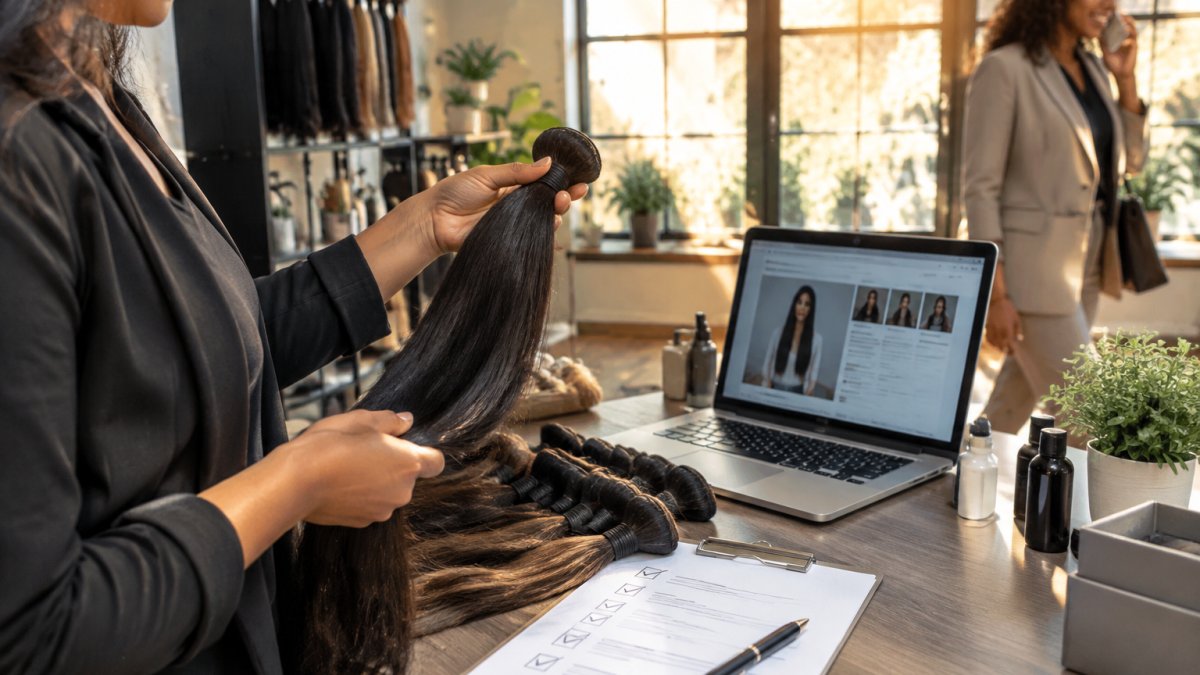
Here is the checklist in brief, with the evidence to request for each point.
| Check | Evidence to request |
|---|---|
| Country and method of collection | Region, and whether temple, salon or door-to-door |
| Donor consent | Sample consent form or description of process |
| Payment to donors | Payment model: per bundle, per gram or fixed fee |
| Bundle traceability | Record linking bundle to donor or batch ID |
| Labour standards | Code of conduct or working conditions summary |
| Independent audit | Named auditor with a recent date |
| Follow-up questions | Specific answers, without deflecting |
| Packaging and processing claims | Which components are recyclable, and where |
Choosing Ethically Sourced Extensions for Your Salon
For a salon, consistency matters as much as ethics. Clients notice when quality shifts between orders, and your reputation rides on every fitting.
Our buyer's guide to ethical human hair covers where to source and what to expect. At QUEEN OF GOOD HAIR, every bundle is 100% single-donor virgin hair with a full chain of traceability from donor to delivery, and donors are paid fairly. Our nano bond extensions at £127 suit fine to medium hair, while the invisi tape and flat weft ranges at £137 give you options for different install methods.
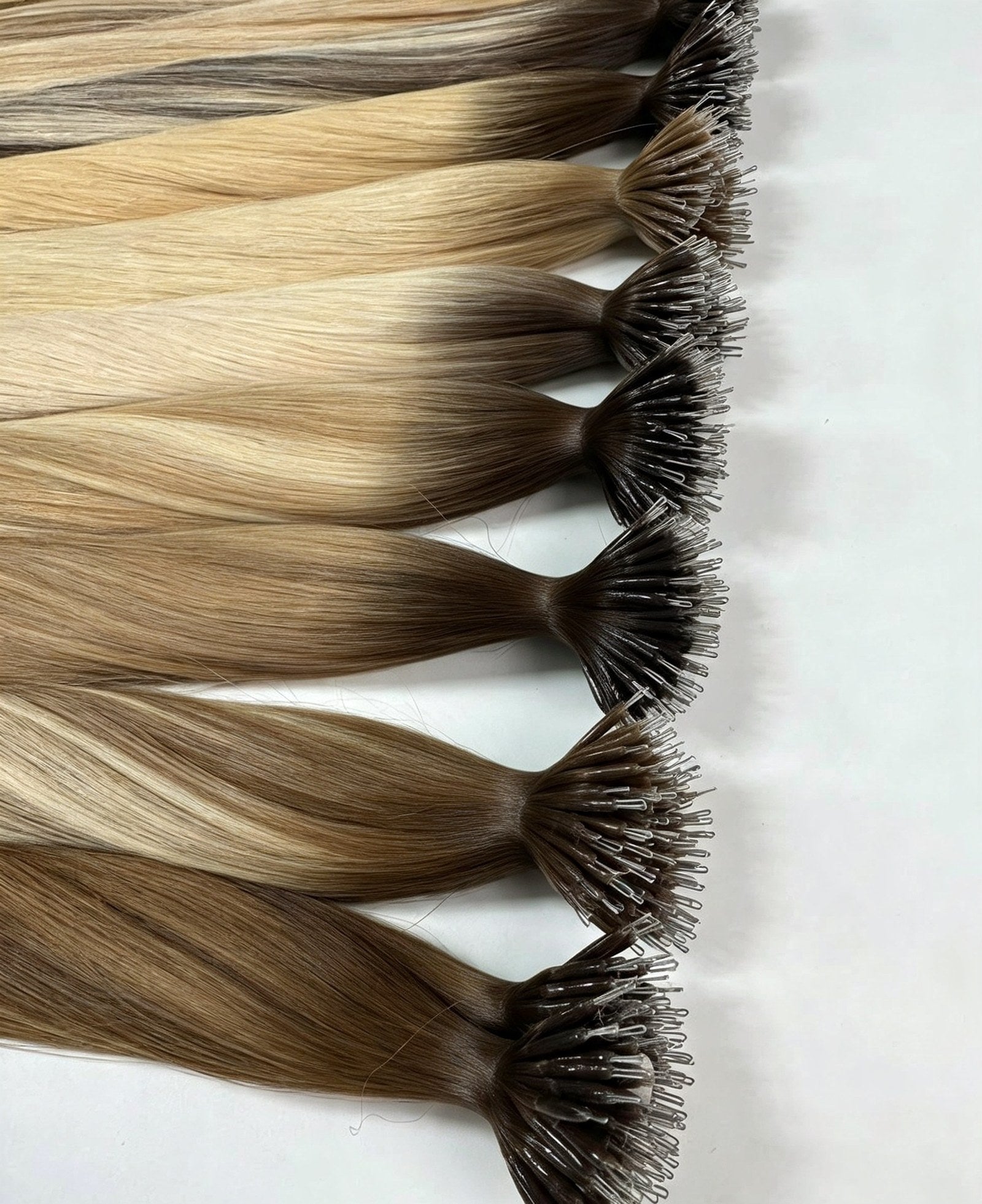
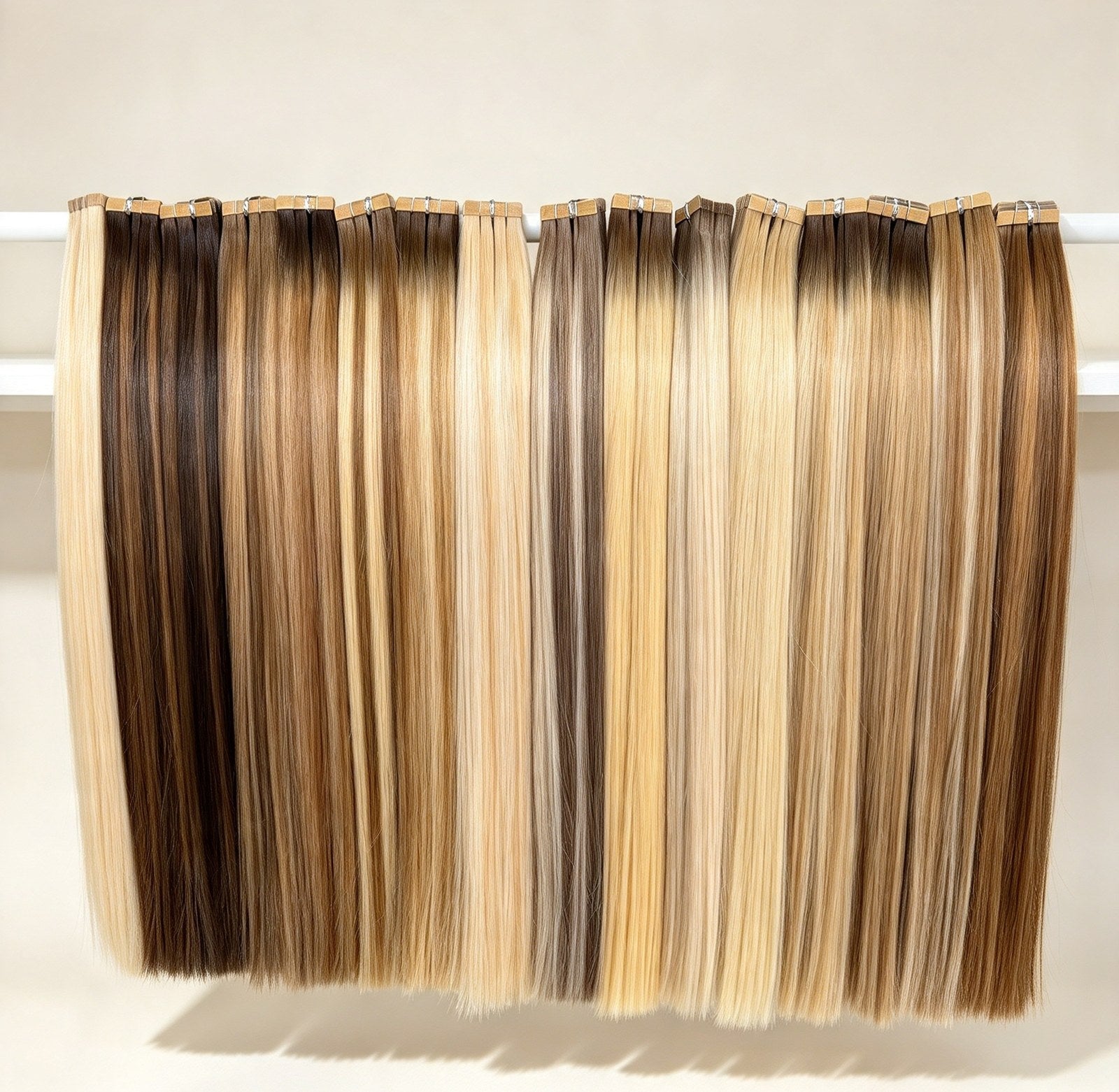
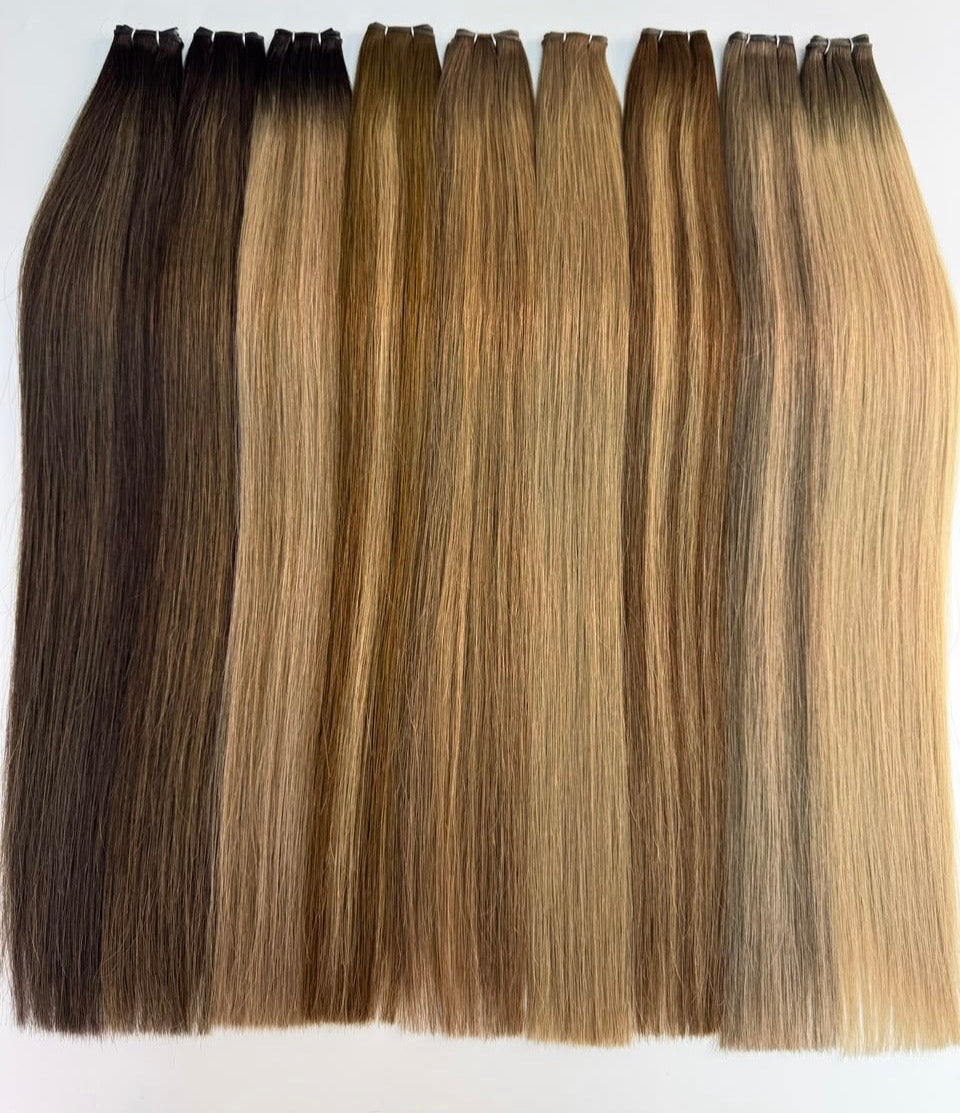
The hard part is not finding hair. It is finding a supplier who will show you the evidence behind every claim. That is the standard we hold ourselves to at QUEEN OF GOOD HAIR: single-donor virgin hair, cuticle-intact, with a traceable chain from donor to delivery and a 12 to 24 month lifespan. Browse the full range and see the difference that real traceability makes.
Frequently Asked Questions
What does ethically sourced hair mean?
Ethically sourced hair means the donor gave informed consent, received fair compensation, and the supply chain can be traced from collection to the finished product. It also means labour standards were met at every stage. The phrase has no single legal definition, so a label alone proves nothing. Look for evidence such as supplier disclosure, traceability records and a written sourcing policy rather than marketing language.
How can I tell whether hair extensions are ethically sourced?
Ask for traceability documentation, a written sourcing policy and details about donor consent and fair pay. Check whether the brand uses single-donor hair, which is easier to trace than mixed-source bundles. Look for independent verification and honest labelling about origin and processing. If a supplier cannot answer basic questions about where the hair came from, treat the ethical claim as unproven.
What is the difference between virgin hair and ethically sourced hair?
Virgin hair refers to hair that has not been chemically processed, coloured or bleached. It says nothing about how the hair was collected or whether the donor consented. Ethically sourced hair is about the supply chain: consent, fair compensation, labour conditions and traceability. A bundle can be virgin hair and still come from an unethical source, so you need both qualities to make a responsible purchase.
Why does single-donor hair matter for ethical sourcing?
Single-donor hair comes from one person, which makes the supply chain easier to trace and verify. Mixed-source bundles combine hair from many donors, so proving consent and fair pay becomes far harder. Single-donor hair also performs better because the cuticles are aligned, reducing tangling and matting. For salon owners who need consistency across orders, it gives a more reliable and transparent product.
