

Best Alternatives to Tape-In Extensions: 2026 Guide
Table of Contents
- Why Look for Alternatives to Tape-In Extensions?
- Quick Comparison: Alternatives to Tape-In Extensions
- Weft Extensions vs Tape-In Extensions
- Nano Bond Extensions: Glue-Free and Heat-Free
- Keratin Bond Extensions: The Longest-Lasting Method
- Clip-In vs Tape-In Extensions
- Hair Extensions for Fine Hair: Choosing the Right Method
- How Long Do Hair Extensions Last?
- Frequently Asked Questions
Last Updated: October 18, 2026
Why Look for Alternatives to Tape-In Extensions?
Tape-in extensions are a popular quick-fix, but they come with real limits: adhesive that weakens after a few washes, slippage on fine hair, and a removal process that can pull at the scalp. If you have fine hair, an active lifestyle, or a salon client who wants something more durable, it is worth knowing what else is out there.
At QUEEN OF GOOD HAIR, we supply single-donor, cuticle-intact hair across several attachment methods, and we have seen how much the right method matters for comfort and longevity. Below, we compare the best alternatives to tape in extensions, from flat wefts to keratin bonds, so you can match the method to the hair type.

The core issue is simple: tape relies on an adhesive bond sitting against the scalp. That works for some, but it is rarely the longest-lasting or most discreet choice. The methods that follow solve different problems, and picking well comes down to your hair density, your routine, and how often you want to sit in a chair.
Quick Comparison: Alternatives to Tape-In Extensions
Here is how the main methods stack up on the factors that matter most.
| Method | Bond Style | Best For | Typical Wear |
|---|---|---|---|
| Flat weft | Sewn-in, sits flat to scalp | Fine to medium hair, low bulk | Long-wearing, maintained at appointments |
| Nano bond | Micro-ring, no glue or heat | Fine hair, discreet root | Long-wearing with regular maintenance |
| Keratin bond | Heat-fused strand by strand | Durability, 4-5 months between visits | Longest-lasting bond method |
| Clip-in | No bond, removable daily | Occasional wear, no commitment | Daily, removed at night |
The trade-off is consistent: methods that sit closest to the scalp and use the least adhesive tend to look most natural on finer hair, while bonded methods last longer between appointments.

Weft Extensions vs Tape-In Extensions
Weft extensions beat tape-ins on longevity and scalp comfort because the hair is sewn or bonded into a track rather than glued flat against the root. A weft carries weight along a sturdier base, so it distributes tension more evenly and holds its shape through repeat washing.
Tape-in strips are quicker to fit, which is their main advantage. But the adhesive degrades, and on fine hair the flat panels can show at the parting. Wefts, by contrast, can be cut and shaped to the head, and a well-fitted weft moves with your own hair rather than sitting on top of it.
Flat Wefts: The Low-Bulk Option
Flat wefts are the closest thing to a direct upgrade from tape-ins for anyone worried about bulk. The track lies flatter against the scalp than a traditional weft, so there is no ridge and no bump under the hair.
Our FLAT WEFT - 50g is made from 100% single-donor virgin hair with intact cuticles, which is what keeps it from tangling and matting over months of wear. It is priced at £137.00 for 50g and lasts 12-24 months with proper care. For fine hair especially, that flat profile is the difference between a natural result and an obvious one.
Nano Bond Extensions: Glue-Free and Heat-Free
Nano bond extensions are a strong alternative to tape-ins for anyone who reacts badly to adhesive or wants the most discreet root possible. Instead of glue, each strand is held by a tiny micro-ring, so there is no heat and no sticky residue at the scalp.
The NANOBOND - 50g uses the smallest bond on the market, which makes it nearly invisible at the root. That matters on fine to medium hair, where larger bonds catch the light and show. It is 100% single-donor virgin hair, cuticle-intact, priced at £127.00 for 50g, and lasts 12-24 months. The method suits anyone who wants tape-level speed of application without the adhesive.
Keratin Bond Extensions: The Longest-Lasting Method
Keratin bonds are the longest-lasting attachment method available, which makes them the go-to for clients who want to sit in the chair as little as possible. Individual strands are fused with a gentle heat wand, giving a seamless, natural finish that holds for 4-5 months between appointments.
Our KERATIN BOND - 50g is 100% single-donor virgin hair, cuticle-intact, and lasts 12-24 months overall. It is priced at £127.00 for 50g. The trade-off is application time: strand-by-strand fitting takes longer than tape, and removal needs a trained hand. For durability and a finish that genuinely disappears into the hair, nothing else comes close.

Clip-In vs Tape-In Extensions
Clip-in extensions win on flexibility: no adhesive, no salon appointment, and you take them out at night. Tape-ins stay in for weeks but need maintenance and carry the adhesive drawbacks we have covered.
If you want volume for a specific event or a few days a week, clip-ins are the sensible, low-commitment choice. If you want semi-permanent length and are weighing it against tape, a flat weft or nano bond gives you the same wear-in convenience with a better long-term result. The real question is commitment: clip-ins ask for none, and the bonded and sewn methods ask for a maintenance routine.
Hair Extensions for Fine Hair: Choosing the Right Method
Fine hair is where method choice matters most, because heavy or bulky attachments show and pull. The best approach is to prioritise a low-profile track, minimal adhesive, and hair that matches your own density rather than adding obvious weight.
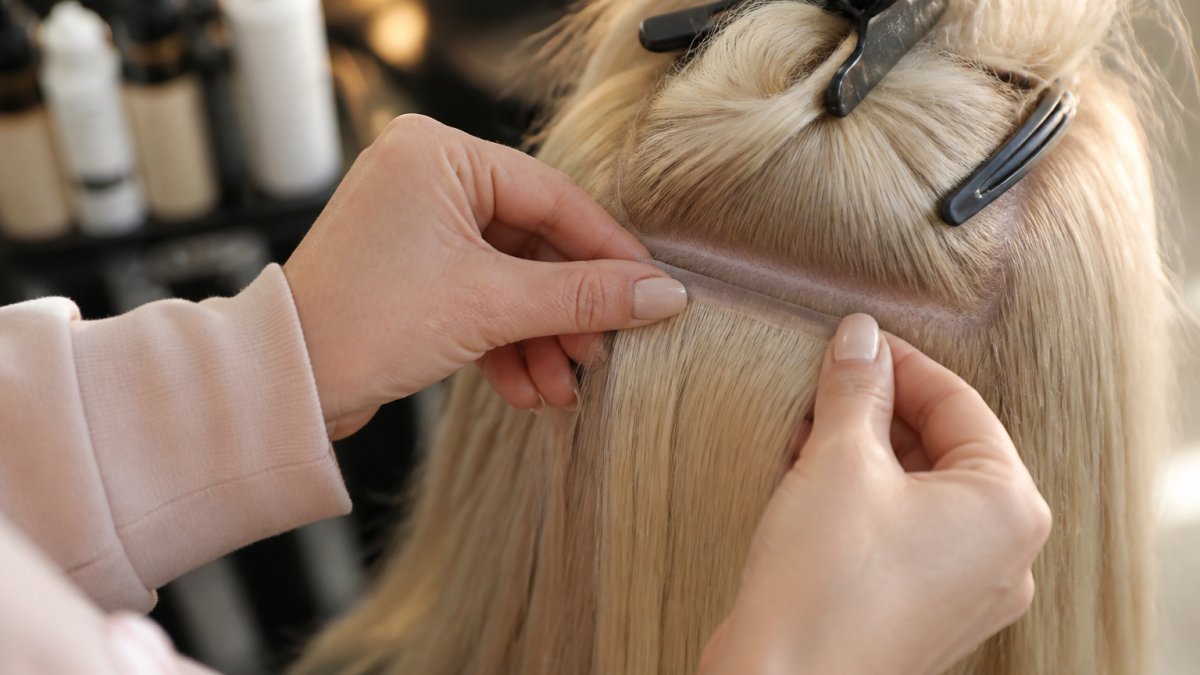
For fine hair, we recommend a flat weft for length and a nano bond for discreet volume, since both keep the attachment close to the scalp without a visible ridge. Single-donor, cuticle-intact hair also helps: because the cuticles all face the same direction, it lies flatter and resists the tangling that makes fine hair look thin. If you are weighing up the best alternatives to tape in extensions for a fine-haired client, start with the flattest method you can fit well.
How Long Do Hair Extensions Last?
Hair extension lifespan depends on the method and the care routine. Bonded and sewn methods from quality single-donor hair typically last 12-24 months, with in-salon maintenance every few months to move the bonds or tighten the weft. Daily washing, heat styling, and poor aftercare shorten that significantly.
Tape-ins tend to have the shortest effective life because the adhesive weakens and the panels need replacing more often. Clip-ins last as long as the hair itself if stored and washed gently, since there is no bond to degrade. The throughline across every method is the same: cuticle-intact, single-donor hair lasts longer than processed hair, whatever the attachment.
Frequently Asked Questions
What are the best alternatives to tape-in hair extensions?
Flat wefts, nano bonds and keratin bonds are the main alternatives. Flat wefts sit closest to the scalp with minimal bulk, nano bonds use a tiny ring with no glue or heat, and keratin bonds are fused strand by strand for the longest wear. For fine hair, nano bonds and flat wefts usually give the most natural root. Each method suits a different hair type and maintenance routine, so match the choice to your density and how often you can attend appointments.
Are weft extensions better than tape-in extensions?
In weft extensions vs tape-in extensions, wefts generally win on longevity and root discretion. A flat weft sits closer to the scalp than a tape panel, so there is less chance of visible bulk, and the hair can be reused across multiple fittings. Tape-ins are faster to fit but the adhesive panels can lift in heat and need replacing more often. If you want fewer salon visits and a flatter profile, a weft is usually the stronger choice.
Which hair extension method is best for fine hair?
For hair extensions for fine hair, nano bonds and flat wefts are the safest bets. Nano bonds use the smallest ring on the market and sit invisibly at the root, while flat wefts avoid the bumps that heavier wefts create. Both distribute weight evenly so natural strands are not pulled. Avoid bulky double-wefts and thick tape panels, which show through low-density hair. Always ask a stylist to assess your density before committing to a method.
How long do hair extensions last?
When people ask how long do hair extensions last, the answer depends on the method and the hair quality. Keratin bonds are typically refitted every 4 to 5 months, nano bonds and flat wefts similar, while clip-ins last a day per wear. The hair itself can last far longer: single-donor, cuticle-intact hair from QUEEN OF GOOD HAIR is rated for 12 to 24 months with correct aftercare, so the fitting cycle is shorter than the lifespan of the hair.
Can you wear hair extensions without glue or tape?
Yes. Nano bonds use a small metal ring rather than adhesive, and flat wefts are attached with thread or micro-rings depending on the stylist's method. Both avoid the sticky residue and heat sensitivity that come with tape and keratin. If you want a semi-permanent fitting with no glue, ask your stylist about nano rings or a sewn flat weft.
Choosing the right method is the difference between extensions that look natural for months and ones you are desperate to remove. If you are moving away from tape-ins, we can help you match a method to your hair type. Explore the QUEEN OF GOOD HAIR range of single-donor, cuticle-intact hair, including flat wefts and nano bonds, and get a set built to last. Shop All and find your method.