

Are Hand Tied Weft Extensions Worth the Investment?
Last Updated: November 7, 2026
Quick Summary
Hand tied weft extensions are worth the investment if you have fine to medium hair, because the thin, flexible base lies flat and stays hidden where machine wefts look bulky. They cost more, but with proper care they last 12 to 24 months and can be reused.
- Each strand is knotted by hand onto a thin thread base, giving a flat, lightweight strip.
- Machine wefts are denser and stiffer, so they suit medium to thick hair rather than fine hair.
- Installation is a sew-in method using an anchor braid or micro rings with needle and thread.
- Book a move-up every 6 to 8 weeks to re-tighten the wefts and keep tension even.
- Choose single-donor hair with aligned cuticles and no silicone coating for quality.
Table of Contents
- What Makes Hand Tied Weft Extensions Different?
- Hand Tied Weft Installation: A Step-by-Step Guide
- Are Hand Tied Weft Extensions Suitable for Fine Hair?
- Hand Tied Weft Extensions Maintenance: Your Aftercare Schedule
- How Long Do Hand Tied Weft Extensions Last?
- Risks, Warning Signs and Safe Removal
- Choosing Your Hand Tied Weft Extensions
- Frequently Asked Questions
What Makes Hand Tied Weft Extensions Different?
Hand tied weft extensions are strips of human hair where each strand is knotted by hand onto a thin, flexible thread base rather than sewn onto a thick machine-made band. That single construction detail changes everything about how they sit, move and feel. The difference between a hand tied weft and a machine weft is the difference between a hairpiece and hair that behaves like your own.
The hand-tied method produces a flat, lightweight strip. It bends with the head and lies close to the scalp, so it disappears under fine hair. Machine wefts are denser and stiffer, which suits thicker textures but can look bulky on anyone with less density.
Here is the honest part most guides skip: hand tied wefts cost more because a person, not a machine, made them. You are paying for labour and a thinner base, not magic.
Hand Tied vs Machine Wefts: Key Differences
| Feature | Hand Tied Weft | Machine Weft |
|---|---|---|
| Base thickness | Very thin, flexible | Thick, rigid |
| Feel against scalp | Flat and light | Bulkier |
| Best for | Fine to medium hair | Medium to thick hair |
| Installation method | Sew-in with thread | Sew-in or micro rings |
| Reuse potential | High, if cared for | Moderate |
| Price | Higher | Lower |
Machine wefts are not bad. They are simply built for a different head of hair. If your client has fine strands and you fit a thick machine weft, the base will show through. A hand tied weft solves that problem at the source.
Hand Tied Weft Installation: A Step-by-Step Guide
Hand tied weft installation is a sew-in method: the stylist sections the hair, creates a small anchor braid or bead row, then stitches the weft to it with needle and thread.
Before you book anything, work out how much hair you need. Our guide on how many grams of hair extensions you need walks through the maths by length and density.
Here is the process step by step, with the safety checks that separate a comfortable fit from a painful one:
- Consultation. Match colour, texture and length to the natural hair. Check for any scalp sensitivity, recent chemical treatments or breakage. A patch test is not standard for sew-in methods, but a thorough scalp check is.
- Sectioning. Part clean, dry hair into neat rows. Rows should follow the natural curve of the head, not straight lines. Keep each row narrow enough that the weft sits flat without overlapping.
- Anchor row. Braid a thin row or fit micro rings as the base. The anchor must be secure but never tight. A good test: the client should be able to frown and raise their eyebrows without feeling pull at the anchor.
- Stitching. Sew the weft to the anchor with a curved needle and thread. Use a figure-of-eight stitch for flexibility. Keep tension even, too loose and the weft slips, too tight and it pulls.
- Blend and cut. Layer the weft into the natural hair. Cut after styling, not before, so you can see how the hair falls.
- Safety check. Confirm no pulling, no tight spots and a flat lie. Ask the client to turn their head side to side and tilt it forward. Any sharp sensation means the tension needs adjusting before they leave the chair.
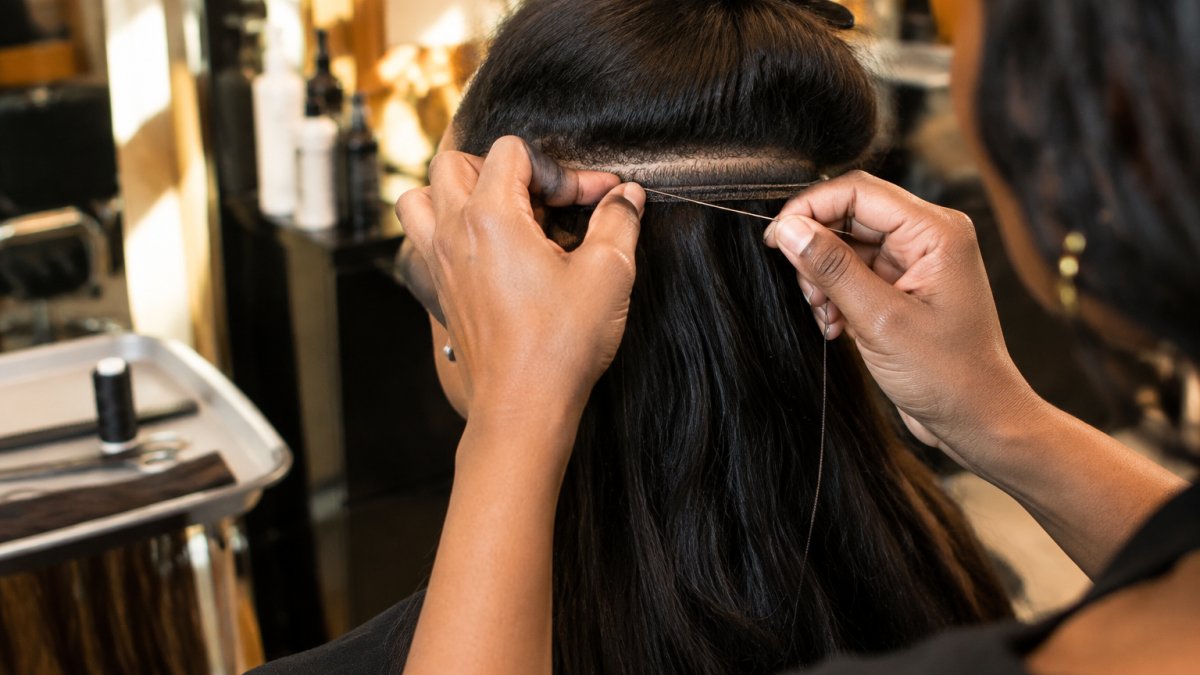
Tools and Preparation for a Safe Fit
A safe fit starts with the right kit. You need curved needles, strong thread, sectioning clips, a tail comb and micro rings if you are using a bead-based anchor. The hair itself must be clean, dry and product-free.
Watch out: fitting a weft to wet or coated hair is a common mistake. The anchor slips, tension builds in the wrong place, and the client feels it within days.
Troubleshooting Common Installation Issues
Even experienced stylists run into problems. Here is how to spot and fix the most common ones:
- Weft slipping: usually caused by an anchor that is too loose or thread that is too smooth. Re-stitch with a textured thread and a tighter anchor.
- Visible base: the weft is sitting too high or the section is too wide. Lower the row and use a thinner weft.
- Client discomfort: check for tight stitches or a bead that is pinching. Adjust before the client leaves, pain that starts on day one rarely settles.
- Matting at the anchor: often a sign of product build-up or brushing the wrong way. Clean the area gently and review aftercare.
A common pattern is that clients who feel any pulling in the first 48 hours will not adapt to it. Fix it immediately rather than asking them to wait.
Are Hand Tied Weft Extensions Suitable for Fine Hair?
Hand tied weft extensions have a thin base that can suit fine hair. Fine hair struggles with thick bases, which show through and drag on delicate strands.
Density, scalp condition and lifestyle all matter. Someone with a sensitive scalp needs a loose anchor and regular checks. An active client who swims or trains hard needs a firmer aftercare routine.
If you are weighing up methods, our comparison of the best hair extensions for fine hair sets hand tied wefts against tape and other options in detail.
A common mistake is assuming fine hair means less hair. It usually means lighter wefts, fitted with more care.
Hand Tied Weft Extensions Maintenance: Your Aftercare Schedule
Hand tied weft extensions maintenance comes down to a simple rhythm: gentle washing, careful brushing and regular move-up appointments. Skip any of the three and the weft will shed, mat or pull.
Follow this schedule:
- Daily: brush gently with a loop brush, working from ends upward. Never brush wet hair.
- Washing: every 2-3 days with sulphate-free shampoo, always in a downward motion.
- Weekly: check the anchor rows for looseness or tension.
- Every 6-8 weeks: book a move-up appointment to re-tighten the wefts.
- Always: avoid heavy oils at the root and never brush wet wefts roughly.
Washing, Brushing and Styling Without Damage
Wash in the shower with the hair hanging straight down. Never pile it on top of your head. Rinse thoroughly, then squeeze out water with a towel instead of rubbing. Apply conditioner from mid-lengths to ends only, never at the root, where it can loosen the anchor.
Styling is where people cause damage. Heat tools are fine on human hair, but keep them off the anchor rows. Always use a heat protectant. Our full hair extension aftercare guide covers the details in depth.
Sleeping and Exercise
Before bed, loosely plait the hair or tie it in a low ponytail with a soft scrunchie. Never sleep with wet wefts, damp hair stretches and can pull at the anchor. If you exercise regularly, rinse the hair with cool water after sweating and dry the anchor area thoroughly. A common pattern is that clients who swim frequently need move-ups closer to the 6-week mark rather than 8.
Troubleshooting Common Aftercare Problems
- Tangling: often caused by product build-up or brushing from the top down. Clarify once a week and brush from ends upward.
- Slipping wefts: check for conditioner at the root or a loosened stitch. Book a move-up sooner rather than later.
- Matting at the nape: usually from sleeping on wet hair or friction from collars. Keep the area dry and brush gently.
- Shedding: some shedding is normal, but excessive loss can signal a poor-quality weft or a damaged anchor. Have it checked by your stylist.
Watch out: ignoring a loose anchor for more than a week can lead to tension damage at the root. If you feel any sharp pull, book a check-up straight away.
How Long Do Hand Tied Weft Extensions Last?
Hand tied weft extensions lifespan runs 12 to 24 months with proper care.
Three things decide how long yours last:
- Hair quality. Cuticle-intact, single-donor hair resists tangling.
- Aftercare. Consistent washing and brushing protect the strands.
- Refitting. Move-ups keep tension even and prevent stress on the weft.
For a fuller picture of real-world lifespans across methods, read our honest guide to how long hair extensions really last.
Risks, Warning Signs and Safe Removal
The main risks with any sewn-in weft are tension damage, traction on the natural root and matting at the anchor. These are avoidable with a careful fit and regular checks.
Watch for these warning signs:
- Pain or headaches after fitting
- Visible pulling at the root
- Slipping or loose stitches
- A musty smell near the anchor
- Shedding far beyond normal
Safe removal matters as much as safe fitting. A trained stylist should cut the thread and lift the weft away. Never pull a weft out. If you feel sharp pain or see broken hairs at the root, have it checked straight away.
Choosing Your Hand Tied Weft Extensions
Quality is the whole game with hand tied wefts. Look for single-donor hair, aligned cuticles and no silicone coating.
Ask three questions before you buy:
- Is the hair single-donor or mixed?
- Are the cuticles aligned in one direction?
- Can the supplier show where the hair came from?
Our Genius Weft range is built on single-donor virgin hair with intact cuticles, ethically sourced with fair pay for donors and full traceability from donor to delivery. Our wefts are designed to last 12 to 24 months.
The real test of any weft is how it behaves after three months, not how it feels in the packet. If you want hair you can trust for the long haul, QUEEN OF GOOD HAIR offers 100% single-donor virgin hair, full traceability and no silicone coating, backed by founder Tammy Laroche's 30 years of experience. Get started with QUEEN OF GOOD HAIR and fit wefts that look natural and last.
Frequently Asked Questions
What are hand tied weft extensions?
Hand tied weft extensions are premium hair additions where strands are manually woven into a thin, flexible strip. Unlike machine-made wefts, this hand-crafted method creates a flatter, more pliable base that sits closer to the scalp. The result is a seamless, natural-looking volume boost with less bulk. At QUEEN OF GOOD HAIR, our flat wefts use 100% single-donor virgin hair with aligned cuticles, ensuring a long lifespan of 12 to 24 months with proper care.
How long do hand tied weft extensions last?
With correct maintenance, hand tied weft extensions can last between 12 and 24 months. The lifespan depends on hair quality, aftercare routine, and how often you wear them. Single-donor, cuticle-intact hair offers the greatest longevity. Regular move-up appointments every 6 to 8 weeks are essential. Avoid silicone-coated hair, as it masks damage and shortens longevity.
Are hand tied weft extensions damaging to your hair?
When installed and removed correctly by a trained professional, hand tied weft extensions cause minimal damage. The method uses thread and micro rings without glue or heat, reducing stress on natural hair. However, incorrect tension, poor aftercare, or leaving them in too long can lead to breakage. Always choose a qualified stylist and follow a strict maintenance schedule. Signs of damage include scalp tenderness, slipping wefts, or excessive shedding at the attachment site.
Can you reuse hand tied weft extensions?
Yes, hand tied weft extensions are reusable. Because the weft is hand-tied rather than glued, it maintains its integrity through careful removal and reinstallation. Most high-quality sets can be reused for 2 to 3 move-up appointments, provided the hair is washed, conditioned, and stored correctly between wears. Our flat wefts are particularly durable due to cuticle-aligned, single-donor hair. Reuse extends value and reduces waste, making them a more sustainable choice.
