

Are Expensive Hair Extensions Worth It? A 2026 Guide
Table of Contents
- What Makes Hair Extensions Expensive
- Signs of Low-Quality Hair Extensions
- The Real Cost of Professional Hair Extensions
- How Long Expensive Hair Extensions Actually Last
- The Best Hair Care Routine for Raw Hair Extensions
- Who Gets the Most Value From Expensive Hair Extensions
- Conclusion
- Frequently Asked Questions
Last Updated: September 27, 2026
What Makes Hair Extensions Expensive
Hair extensions are expensive when they are made from single-donor, cuticle-intact virgin hair that has never been chemically stripped, coated or blended with shorter strands. The raw material cost, the length of the hair, and the labour involved in matching a single donor's cuticles all push the price up. At QUEEN OF GOOD HAIR, we see the same question come up again and again: are expensive hair extensions worth it, or are you simply paying for a label? The honest answer sits in what you're actually buying.
Two bundles can look identical on a hanger and behave completely differently after three washes. That gap is where the money goes.
Single-Donor Virgin Hair vs Blended Hair
Single-donor virgin hair is hair collected from one person, with the cuticles left intact and running in the same direction. This alignment is what stops the strands from gripping each other, so the hair resists tangling and matting.
Blended hair mixes strands from multiple donors, often with cuticles stripped and a silicone coating applied to fake smoothness. That coating washes off, and the hair reverts to a matted, dry texture. The UK government guidance on cosmetic product safety and ingredients sets out how coatings and treatments on hair products must be declared, which is a useful reminder to ask what's actually on the strand.
Signs of Low-Quality Hair Extensions
Low-quality extensions usually reveal themselves quickly: shedding within the first fortnight, a chemical or plasticky smell, and a texture that feels coated rather than soft. If the hair tangles at the root after one wash, the cuticles are misaligned.
Watch for these red flags:
- Shedding more than a few strands per brush-out in the first two weeks
- A waxy or silicone-like feel that disappears after washing
- Strands of noticeably different thickness or colour within one bundle
- Tangle-prone ends that mat together even when dry
- No information about the donor, origin or processing method
A common mistake is judging hair by how it feels in the packet. Silicone coating makes cheap hair feel luxurious until the first wash. Ask instead whether the hair is cuticle-intact and single-donor, and whether the supplier can trace it.
The Real Cost of Professional Hair Extensions
Professional hair extensions in the UK typically cost more because you're paying for the hair, the fitting, and the maintenance, not just the product. A single 50g bundle of genuine virgin hair sits at the premium end, and most full-head installations need several bundles.
At QUEEN OF GOOD HAIR, our 50g bundles are priced as follows:
| Method | Weight | Price | Best For |
|---|---|---|---|
| Nano Bond | 50g | £127.00 | Fine to medium hair |
| Keratin Bond | 50g | £127.00 | 4-5 months between appointments |
| Invisi Tape | 50g | £137.00 | Fast fitting, high ponytails |
| Flat Weft | 50g | £137.00 | Seamless volume, no bulk |
The cost of professional hair extensions also includes the fitting appointment and periodic refits. Budget for the hair itself, the stylist's time, and maintenance every few months. Spreading that across a 12 to 24 month lifespan changes the maths considerably.

How Long Expensive Hair Extensions Actually Last
Quality virgin hair extensions last between 12 and 24 months with correct care, compared with a few months for coated or blended hair. The lifespan depends on the bond method, how often you wash them, and how you brush them.
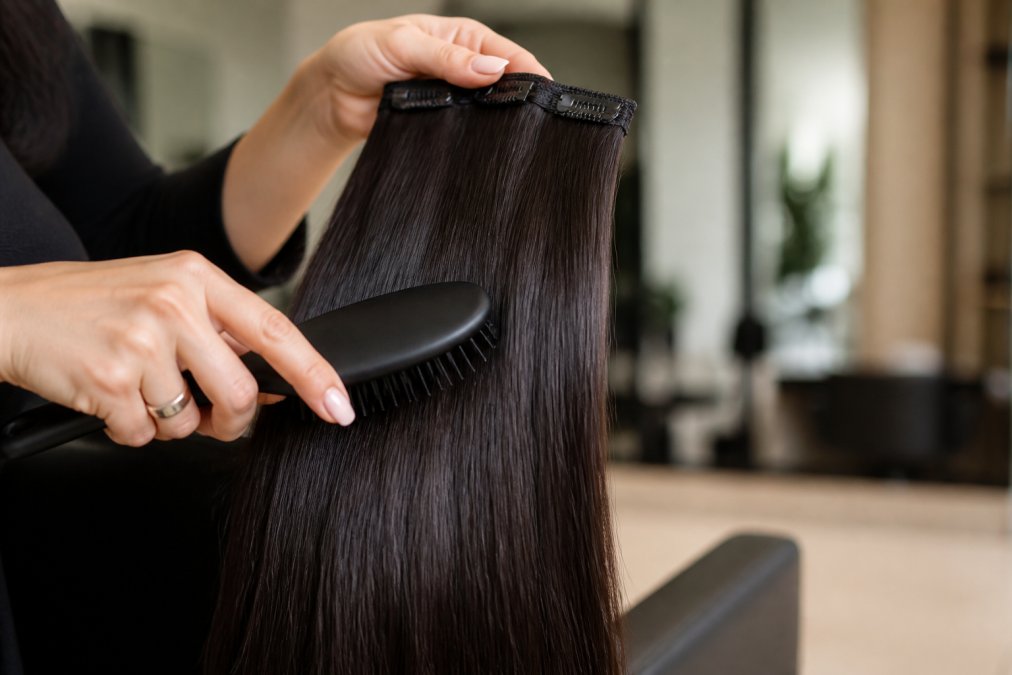
Bond choice matters here. Keratin bonds are designed for four to five months between appointments, while tape extensions can be reused across multiple applications. Nano bonds suit finer hair because the bond is small and discreet at the root.
What most guides miss is that the hair outlasts the bond. You'll usually refit the same strands several times before the hair itself needs replacing, which is exactly why the upfront cost spreads out.
The Best Hair Care Routine for Raw Hair Extensions
The best hair care routine for raw hair extensions is gentle and consistent: sulphate-free washing, heat protection before styling, and daily brushing from the ends upward. Raw, cuticle-intact hair behaves like your own hair, so it responds to the same care.
Build these habits:
- Brush from the ends up, never from the root down
- Wash with sulphate-free shampoo and lukewarm water
- Apply heat protection before any styling tool
- Use a weekly deep-conditioning mask on the mid-lengths and ends
- Sleep with hair loosely plaited or in a silk wrap
- Book refits before bonds loosen, not after
Avoid overlapping products at the root, where residue builds up and loosens bonds. If you colour your extensions, do it with a professional who understands virgin hair, since cuticle-intact hair takes colour differently from coated strands.
Who Gets the Most Value From Expensive Hair Extensions
Expensive hair extensions deliver the most value for people who wear them daily, want a natural blend, and plan to keep them beyond a single season. If you're after a one-off look for a single event, a cheaper option may be sensible. If you want hair that behaves like your own for a year or more, the maths favours quality.
Salon owners get particular value from consistency. When every bundle matches the last, clients notice, and your reputation holds. Our single-donor sourcing and full chain of traceability mean each order is matched to the same standard, which is what salon professionals need to guarantee results.
Fine-haired clients often worry extensions will look bulky. Nano bonds and flat wefts solve this because they sit close to the scalp without adding bulk. For anyone with thinning hair seeking a seamless, natural result, the bond method matters as much as the hair itself.
Conclusion
Choosing between cheap and premium extensions comes down to how long you need them to last and how natural you need them to look. The upfront cost of quality hair is real, but so is the replacement cycle that cheap hair forces on you.
QUEEN OF GOOD HAIR offers 100% single-donor virgin hair with a full chain of traceability, ethically sourced with fair pay for donors, and a 12 to 24 month lifespan backed by cuticle-intact strands that resist tangling. Our Nano Bond, Keratin Bond, Invisi Tape and Flat Weft methods cover fine, medium and thick hair types, with no silicone coating to wash away. Shop All and invest in extensions that behave like your own hair.

Frequently Asked Questions
How long do high-quality hair extensions actually last?
Premium single-donor virgin hair extensions typically last 12 to 24 months with proper care. The lifespan depends on the bond method and how well you maintain them. Keratin bond extensions usually need reapplication every 4 to 5 months, while tape methods can be reused for up to 8 to 12 applications. Cheaper blended hair often mats or sheds within a few months, which is why the upfront cost of expensive hair extensions can work out cheaper over time.
Are single-donor hair extensions better than blended hair?
Yes, for longevity and natural appearance. Single-donor hair comes from one person, so all cuticles are aligned and run in the same direction. This prevents tangling, matting and uneven shedding. Blended hair mixes strands from multiple donors, which often leads to rough texture and a shorter usable life. If you want extensions that blend seamlessly and survive daily wear, single-donor virgin hair is the stronger choice.
Do expensive hair extensions cause more damage to natural hair?
Not if they are applied and removed correctly. Quality extensions use gentle attachment methods such as nano rings, keratin bonds or tape, which distribute weight evenly. Damage usually comes from poor application, heavy tension or lack of aftercare, not from the hair itself. Choosing a trained stylist and following a proper washing and brushing routine protects your natural hair throughout wear.
How much should I expect to pay for professional-grade hair extensions?
Expect to pay around £127 to £137 per 50g bundle for premium single-donor virgin hair from QUEEN OF GOOD HAIR. Most full-head installations require 100g to 200g, so the hair alone can cost £254 to £548. Fitting and aftercare add to that. While this is more than synthetic or blended options, the 12 to 24 month lifespan means the cost per wear is often lower than replacing cheap sets every few months.