

Alternatives to Beaded Row Extensions
Table of Contents
- Why Choose Alternatives to Beaded Row Extensions
- Tape-In Extensions vs Beaded Row Extensions
- Nano Bond Extensions for Discreet, Damage-Free Wear
- Keratin Bond Extensions: The Longest-Lasting Method
- Sew-In vs Beaded Row Extensions
- Hair Extensions for Fine Hair: Which Method Works Best
- How Long Do Tape-In Extensions Last and What to Expect
- Comparison Table: Extension Methods at a Glance
- Frequently Asked Questions
Last Updated: October 15, 2026
Why Choose Alternatives to Beaded Row Extensions
Beaded row extensions have long been a go-to method for adding volume and length, but they're far from the only option. If you're exploring alternatives to beaded row extensions, you're likely considering factors like comfort, longevity, damage risk, and how well the method suits your hair type.
One size doesn't fit all when it comes to hair extensions. Some people find beaded rows uncomfortable against their scalp. Others worry about the tension they place on natural hair. For those with fine or thinning hair, beaded rows can feel heavy and obvious.
The good news: there are several proven alternatives to beaded row extensions that address these concerns directly. Each method has distinct advantages depending on your lifestyle, hair texture, and how long you want your extensions to last between appointments.
Tape-In Extensions vs Beaded Row Extensions
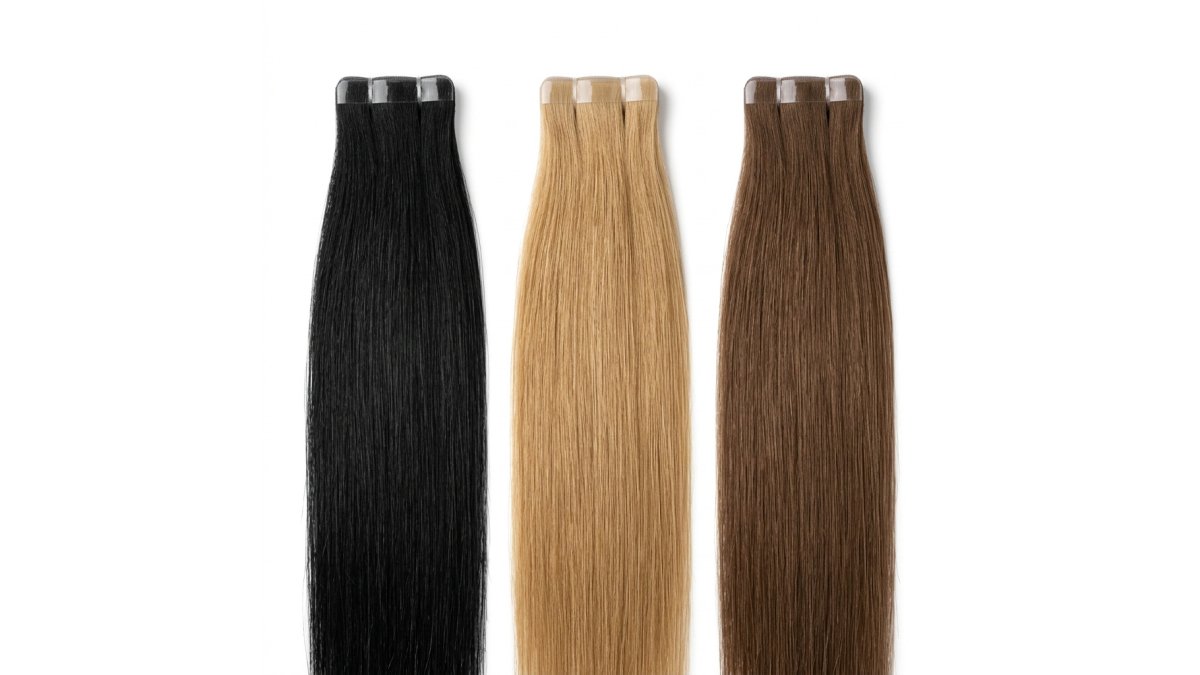
Tape-in extensions represent one of the most straightforward alternatives to beaded row extensions. Rather than using individual beads threaded onto rows of your natural hair, tape-in extensions use flat, adhesive strips that sandwich your hair between two wefts.
How they work: A stylist applies the tape extensions by pressing them directly onto sections of your hair, starting near the roots. Our INVISI TAPE - 50g extensions are applied in this way and sit completely undetectable even in high ponytails.

The comfort difference is immediate. Because tape-ins lie flat against your scalp rather than creating raised beads, many people find them far more comfortable for sleeping, exercising, or wearing their hair up. There's no tension pulling at specific points along your roots.
Reusability is a major advantage. Unlike beaded rows, which require the beads to be removed and replaced, tape-in extensions can be reused for up to 8-12 applications.
The trade-off: tape-ins typically require more frequent salon visits to maintain the adhesive and prevent slipping. Expect to visit your stylist every 6-8 weeks for repositioning.
Nano Bond Extensions for Discreet, Damage-Free Wear
If you've been hesitant about alternatives to beaded row extensions because you worry about damage, nano bond extensions deserve serious consideration. These use the smallest bonding method on the market, so small they're virtually invisible at the root, even with short hair or a close parting.
The application process: Individual strands of your hair are bonded to extension strands using a tiny nano-sized keratin bond. No heat, no glue, no damage. The bond is applied with a special applicator that creates a microscopic connection between your natural hair and the extension.

What makes nano bonds stand out is their discretion. Our NANOBOND - 50g extensions are specifically designed for fine to medium hair, with bonds that vanish into the hairline.

Application time is longer than tape-ins, typically 2-3 hours, because each strand is bonded individually. But the result is seamless, natural-looking extensions that move exactly like your own hair. You can style, colour, and treat them just as you would your natural hair.
Nano bonds require maintenance every 6-8 weeks as your natural hair grows and the bonds shift down the hair shaft.
Keratin Bond Extensions: The Longest-Lasting Method
For those seeking the gold standard in longevity and seamlessness, keratin bond extensions are a long-lasting method available. These are individual strands fused to your natural hair using a heat-activated keratin bond, the same principle used in professional salon treatments.
Why they last longer: The keratin bond creates a permanent fusion between the extension and your natural hair. Because the bond is so durable, these extensions can go longer between appointments, typically 4-5 months, compared to other methods. This makes them ideal if you prefer fewer salon visits or have a busy lifestyle.
Our KERATIN BOND - 50g extensions use a gentle heat wand to fuse individual strands. The result is seamless, natural movement that rivals your own hair. Many stylists and clients consider keratin bonds the most versatile option because they blend so completely.
The investment is higher in terms of application time, expect 3-4 hours, and cost, but the longevity and minimal maintenance make up for it. Between appointments, keratin bonds require only standard hair care: shampoo, condition, and styling as usual.
The primary drawback is removal. Keratin bonds must be carefully dissolved using a professional solvent, and this process should only be done by a trained stylist to protect your natural hair.
Sew-In vs Beaded Row Extensions
Sew-in extensions, also called weft extensions, are a classic method that deserves mention as an alternative to beaded row extensions. Rather than using individual beads, sew-in extensions use a continuous weft of hair that's sewn onto cornrows created in your natural hair.
How they differ from beaded rows: Beaded rows attach individual strands to a thread using beads as anchors. Sew-ins attach an entire weft, multiple strands of hair already connected, to cornrows using thread and a needle. This means the attachment point is distributed across the cornrow rather than concentrated at individual bead points.
For many people, sew-ins feel more secure and less likely to slip. The continuous weft also creates a fuller, more voluminous result because you're adding more hair at once. However, sew-ins do require cornrows underneath, which takes time to create and can create tension on your natural hair if the cornrows are too tight.
Sew-ins are popular among people with textured or curly hair because the cornrow base blends naturally with curly patterns.
Hair Extensions for Fine Hair: Which Method Works Best
This is where many people struggle with beaded row extensions. If you have fine or thinning hair, beaded rows can look bulky, feel heavy, and put unwanted tension on delicate strands.
Nano bonds are the top choice for fine hair. Because the bonds are microscopic and invisible, they don't require bulk at the attachment point. Your natural hair isn't compressed or grouped together at a bead, which means less tension and a more natural blend.
Tape-ins work well for fine hair too, provided you use lightweight extensions. The flat construction means there's no single point of tension, the adhesive distributes the weight across a larger surface area.
Keratin bonds can work for fine hair, but individual strands must be applied with care. A skilled stylist will use fewer bonds per section to avoid overloading fine hair, which means the process takes longer and costs more.
Avoid sew-ins if you have fine hair, as the cornrows can create too much tension.
How Long Do Tape-In Extensions Last and What to Expect
Since tape-in extensions are one of the most popular alternatives to beaded row extensions, it's worth understanding their lifespan in detail.
Initial wear: Tape-in extensions last 12-24 months from the date of application, depending on how well you care for them. This matches the lifespan of quality beaded row extensions, so longevity isn't a deciding factor between the two methods.
Maintenance schedule: Expect to visit your stylist every 6-8 weeks for repositioning. As your natural hair grows, the tape-in extensions shift down the hair shaft.
Between appointments: Treat tape-in extensions like your natural hair. Shampoo and condition gently, avoid excessive heat, and sleep on a silk pillowcase to reduce friction. Don't pull or tug on the extensions when styling.
Reusability advantage: Because the wefts themselves aren't damaged during removal, you can reuse the same extensions for up to 8-12 applications. This means you're only paying for new tape adhesive at each appointment, not new hair.
Signs it's time for new extensions: After 12-24 months, even well-maintained tape-in extensions will start to show wear. The hair may feel drier, tangle more easily, or lose its shine. This is the natural lifespan of any extension method.
Comparison Table: Extension Methods at a Glance
| Method | Application Time | Reusable | Best For | Maintenance Frequency |
|---|---|---|---|---|
| Tape-In | Under 1 hour | Yes (8-12 uses) | Quick application, frequent style changes | Every 6-8 weeks |
| Nano Bond | 2-3 hours | No | Fine hair, invisible bonds, seamless blend | Every 6-8 weeks |
| Keratin Bond | 3-4 hours | No | Longest-lasting, versatile styling, minimal visits | Every 4-5 months |
| Sew-In | 2-3 hours | No | Textured hair, maximum volume, secure fit | Every 6-8 weeks |
| Beaded Row | 2-3 hours | No | Budget-conscious, familiar method | Every 4-6 weeks |
Choosing the right alternative to beaded row extensions comes down to matching the method to your hair type, lifestyle, and maintenance preferences. If comfort and quick application matter most, tape-in extensions deliver. For fine hair, nano bonds offer invisibility and security. For maximum longevity between salon visits, keratin bonds are unmatched.
At QUEEN OF GOOD HAIR, we specialise in 100% single-donor virgin hair across all these methods. Our extensions are designed to last 12-24 months without tangling or matting, far longer than industry average, because we start with ethically sourced, cuticle-intact hair. Whether you choose tape-in, nano bond, or keratin bond extensions, the quality of the hair itself determines how natural they look and how long they perform. Shop our full range and find the method that fits your needs.
Frequently Asked Questions
What are the best alternatives to beaded row extensions?
Tape-in, nano bond, keratin bond, and flat weft extensions all offer distinct advantages over beaded row methods. Tape-in extensions apply in under an hour and are reusable for 8-12 applications. Nano bonds are invisible at the root and ideal for fine hair. Keratin bonds last 4-5 months between appointments and deliver the most seamless results. Flat weft extensions sit closer to the scalp with no visible bulk. Each method uses 100% single-donor virgin hair that lasts 12-24 months when properly maintained.
Are tape-in extensions better than beaded row extensions?
Tape-in extensions offer several advantages: faster application (under an hour), no visible beads or braids, and reusability for up to 8-12 applications before tape replacement is needed. They're totally undetectable even in high ponytails and work well for clients seeking a low-maintenance option. Beaded rows require braiding and can cause tension on the scalp over time. Tape-in extensions from QUEEN OF GOOD HAIR deliver the same 12-24 month lifespan as other premium methods.
Which hair extension method is best for fine hair?
Nano bond and tape-in extensions are the best choices for fine hair because they distribute weight across smaller, less visible bonds. Nano bonds are the smallest, most discreet bond on the market and are specifically designed for fine to medium hair. They use zero glue, zero heat, and zero damage. Flat weft extensions also work well for fine hair because they sit closer to the scalp without creating bulk or bumps. All methods use 100% single-donor virgin hair with aligned cuticles, ensuring a natural blend with finer textures.
How long do tape-in extensions last?
Tape-in extensions last 12-24 months when made from 100% single-donor virgin hair with intact cuticles. The tape itself is reusable for 8-12 applications before needing replacement. With proper care (gentle washing, conditioning, and minimal heat styling), many clients wear the same hair for 4-6 months of daily wear before reapplying fresh tape. Lifespan depends on styling frequency, washing routine, and product use. Premium virgin hair from QUEEN OF GOOD HAIR outperforms industry averages because of its aligned cuticles and single-donor sourcing.
What is the difference between sew-in and beaded row extensions?
Beaded row extensions (also called beaded wefts) use small beads threaded onto individual braids to secure weft hair. Sew-in extensions use needle and thread to stitch weft hair directly onto braids without beads. Sew-in methods can be less visible at the root and distribute tension more evenly across braids, though both require braiding the natural hair first. Neither is as quick or low-maintenance as tape-in or nano bond alternatives. Flat weft extensions from QUEEN OF GOOD HAIR sit even closer to the scalp than traditional sew-in methods, eliminating bulk entirely.